 Hello! now
 tms@lcdchip.com



Microchip Technology HCS361T/SN
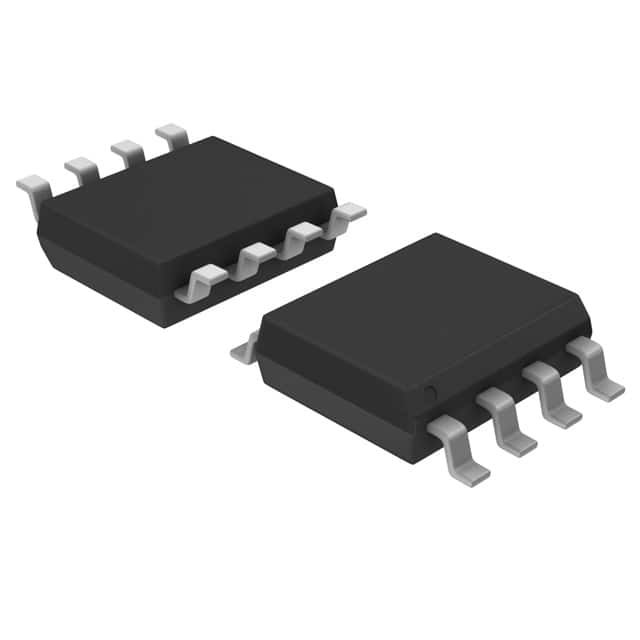
- Part No.:
- HCS361T/SN
- Manufacturer:
- Microchip Technology
- Category:
- Specialized ICs
- Package:
- 8-SOIC (0.154", 3.90mm Width)
- Description:
- IC CODE HOPPING ENCODER 8SOIC
- Quantity:
Unit Price:$0
Ext Price:$0
- Payment:

- Shipping:


Product Details
HCS361T/SN - KEELOQ Code-Hopping Encoder
Microchip Technology HCS361T/SN is an HCS361 code-hopping encoder for unidirectional remote-control transmitters. The T device designation indicates tape-and-reel supply, and /SN denotes an 8-lead plastic SOIC package.
Function, pinout, electrical limits and ordering-code interpretation are based on Microchip data sheet DS40146E. Confirm the latest controlled documentation and application security requirements.
Overview
The HCS361 reads up to four button inputs and generates a changing code-hopping output for a compatible receiver. Its EEPROM stores configuration, serial-number and cryptographic-key information that must be programmed for the intended system. Receiver learning and synchronization are system-level functions, not automatic features of an unprogrammed encoder.
Key Advantages
Code hopping
The encrypted hopping portion changes as the synchronization counter advances, reducing reliance on a fixed transmitted identifier.
Four button inputs
S0 through S3 support up to 15 button-function combinations in the documented configuration.
On-chip nonvolatile data
EEPROM holds programmed encoder parameters and synchronization information.
Integrated transmitter control
The device includes an oscillator, LED drive and selectable output modulation functions.
Feature Summary
2.0–6.6 V operation
The family data sheet states a 2.0 V to 6.6 V operating supply range.
Programmable credentials
A 64-bit cryptographic key and 28- or 32-bit serial-number option are documented.
Output choices
The data sheet describes PWM and VPWM modulation and selectable baud-rate behavior.
Low-power standby
The DC-characteristics table lists a 1.0 µA maximum standby current under its stated conditions.
Package & Footprint
The /SN ordering suffix denotes an eight-lead, 150 mil plastic SOIC. This corresponds to the LCDChip registry's existing 8-SOIC package entry. The T device form is the tape-and-reel ordering option. No -I temperature suffix appears in HCS361T/SN, so use the data sheet's commercial-temperature interpretation rather than assuming an industrial grade.

- Match the Microchip SOIC outline and pin-1 orientation.
- Check DATA, LED and button-input routing against the pin drawing.
- Use the manufacturer's controlled package drawing for land dimensions.
The image is a generic package reference, not the controlled mechanical drawing.
Pin Functions
The manufacturer PDIP/SOIC top-view drawing assigns the eight pins as follows:
Pins 1–4: S0, S1, S2, S3
Button inputs, one input per pin in ascending order.
Pin 5: VSS
Ground reference.
Pin 6: DATA
Encoded serial-data output.
Pin 7: LED
LED output with documented current limiting.
Pin 8: VDD
Positive supply input.
Confirm the physical pin-1 mark before board assembly.
Key Specifications
| Device function | KEELOQ code-hopping encoder |
|---|---|
| Operating VDD | 2.0–6.6 V, per data-sheet feature summary |
| Temperature grade for no -I suffix | Commercial, 0 °C to +70 °C |
| Button inputs | Four: S0–S3 |
| Button functions | Up to 15 combinations |
| Cryptographic key | Programmable 64-bit value |
| Serial-number configuration | 28- or 32-bit option |
| Hopping-code portion | 32 bits |
| Standby current | 1.0 µA maximum in the DC-characteristics table |
| Button-input pull-down | 40–80 kΩ at VDD = 4.0 V |
| Supply absolute maximum | 6.9 V; not an operating target |
| Package/order form | 8-lead SOIC (/SN); tape and reel (T) |
Typical values, limits and mode-dependent timing require the original data-sheet conditions. System security depends on protected key provisioning and receiver design.
Replacement Considerations
Other HCS encoders are not presumed interchangeable. Compare the complete ordering code, temperature grade, SOIC pinout, programming map, modulation and code format, receiver learning method and deployed cryptographic keys before considering a replacement. No internal alternative link is shown because no target product page was verified for this comparison.
Manufacturer Information
Microchip Technology documents the HCS361 in DS40146E. The product identification section defines HCS361T as tape and reel, /SN as 8-lead SOIC, and the unsuffixed temperature grade as commercial. Verify current product, errata and lifecycle documents before release.
Applications
Remote keyless entry
Handheld transmitters paired with a compatible learned receiver.
Garage and gate controls
Button-operated access-control transmitter designs.
Alarm controls
Unidirectional remote-control signaling where code hopping is integrated with receiver policy.
Identity tokens
Compact button-activated transmitters requiring programmed device identity.
Quality & Authenticity
Confirm package marking, traceability and programmed device state against the intended build record. Keep cryptographic keys and manufacturer codes under controlled provisioning. A generic package illustration and catalog description cannot verify an individual lot or completed access-control system.
FAQ
Is HCS361T/SN a complete RF transmitter?
No. It produces encoded DATA; the application needs suitable external transmission hardware and a compatible receiver.
What do T and /SN mean?
T is tape-and-reel ordering; /SN is the eight-lead plastic SOIC package.
Is this an industrial-temperature order code?
No -I suffix is present. The manufacturer's ordering key assigns the unsuffixed version to 0 °C through +70 °C.
Can a receiver use the device without learning?
The receiver must implement matching key generation, learning and synchronization for the programmed encoder.
Engineering Notice
Do not infer present-day security adequacy from a legacy algorithm or device name alone. Review the threat model, key handling, receiver behavior, RF compliance, supply limits and applicable product standards before deployment. The manufacturer data sheet contains differing prose about total code-word length; this page does not assert that disputed total.
HCS361T/SN Information
- Specifications
- Tags
- Product attributes
- Attribute value
- Manufacturer:
- Microchip Technology
- Series:
- KEELOQ®
- Package/Case:
- 8-SOIC (0.154", 3.90mm Width)
- Packaging:
- Tape & Reel (TR)
- Product Status:
- Obsolete
- Programmable:
- Verified
- Type:
- Code Hopping Encoder
- Applications:
- Remote Secure Access, Keyless Entry
- Mounting Type:
- Surface Mount
- Supplier Device Package:
- 8-SOIC
- Grade:
- -
- Qualification:
- -
- Include Parts
- Popular Search
The following parts include "HCS361T/SN" in Silicon Labs HCS361T/SN.
- Part Number
- Manufacturer
- Package
- Description
- CAP200DG-TL Power Integrations 8-SOIC (0.154", 3.90mm Width) IC AUTOMATIC DISCHARGE 8SO
- ATSHA204A-MAHDA-T Microchip Technology 8-UFDFN Exposed Pad IC AUTHENTICATION CHIP 8UDFN
- ATSHA204A-SSHDA-T Microchip Technology 8-SOIC (0.154", 3.90mm Width) IC AUTHENTICATION CHIP 8SOIC
- ATSHA204A-STUCZ-T Microchip Technology TO-236-3, SC-59, SOT-23-3 IC AUTHENTICATION CHIP SOT23-3
- ATECC608B-MAHDA-T Microchip Technology 8-UFDFN Exposed Pad IC AUTHENTICATION CHIP 8UDFN
- ATECC608B-MAHCZ-S Microchip Technology 8-UFDFN Exposed Pad IC AUTHENTICATION CHIP 8UDFN
- ATECC608B-SSHDA-T Microchip Technology 8-SOIC (0.154", 3.90mm Width) IC AUTHENTICATION CHIP 8SOIC
- ATECC608B-MAHDA-S Microchip Technology 8-UFDFN Exposed Pad IC AUTHENTICATION CHIP 8UDFN
- ATECC608A-MAHDA-S Microchip Technology 8-UFDFN Exposed Pad IC AUTHENTICATION CHIP 8UDFN
- ATECC608B-MAVDA-T Microchip Technology 8-UFDFN Exposed Pad IC AUTHENTICATION CHIP 8UDFN
The following parts are popular search parts in Test and Measurement.
Inventory:4,211
Please send an inquiry. Send us your inquiry, and we will respond immediately.


