Hello! now
 tms@lcdchip.com



TIoT-3576SE RK3576 Compact AI Edge Controller Board with 6 TOPS NPU
The TIoT-3576SE is a compact high-performance AIoT controller board powered by the Rockchip RK3576 octa-core processor. Measuring only 100 × 70 mm, it integrates a 6 TOPS NPU, Android 14, 4K at 120 Hz DisplayPort output, eDP and MIPI DSI display interfaces, independent dual-screen display, dual Ethernet ports, Wi-Fi 5, Bluetooth 5.0, five USB ports and industrial expansion interfaces. It is designed for smart retail, industrial IoT, healthcare, security and edge AI terminal applications.
Core Advantages
- Ultra-compact 100 × 70 mm board design
- Rockchip RK3576 octa-core processor
- Maximum CPU frequency up to 2.2 GHz
- Integrated 6 TOPS AI accelerator
- 4 GB memory and 32 GB storage
- Android 14 operating system
- DisplayPort output up to 4K at 120 Hz
- eDP and MIPI DSI dual-screen support
- Gigabit Ethernet plus Fast Ethernet
- Wi-Fi 5 and Bluetooth 5.0
Mini High-Performance Architecture
The TIoT-3576SE measures only 100 × 70 mm, providing powerful computing, display, networking and AI capabilities in a compact form factor suitable for embedded equipment with limited space.
RK3576 Octa-Core Processor
The Rockchip RK3576 octa-core processor operates at frequencies up to 2.2 GHz, delivering responsive multitasking performance for multimedia, industrial control, data processing and intelligent terminal applications.
Integrated 6 TOPS NPU
The integrated neural processing unit delivers up to 6 TOPS of AI computing performance for compatible edge AI workloads, including visual inspection, facial recognition, voice processing and intelligent image analysis.
Balanced 4 GB and 32 GB Configuration
The standard 4 GB memory and 32 GB onboard storage configuration provides sufficient resources for Android applications, AI models, multimedia content and local terminal data.
4K at 120 Hz DisplayPort Output
The DisplayPort signal is routed through the Type-C OTG ribbon connection. It supports 1, 2 or 4 lanes with link rates of 1.62, 2.7, 5.4 and 8.1 Gbps and a maximum resolution of 4K at 120 Hz.
eDP Display Output
One eDP output can directly drive compatible eDP LCD panels with multiple resolutions, making the board suitable for embedded commercial displays and compact touch terminals.
MIPI DSI Display Output
One MIPI DSI output supports compatible LCD panels with resolutions up to 2560 × 1600 at 60 Hz, providing flexible display integration for compact intelligent devices.
Independent Dual-Screen Display
Compatible eDP and MIPI DSI screens can display different content simultaneously, supporting operator screens, customer-facing displays and multi-screen terminal systems.
Dual Ethernet Network Design
The board provides one 10/100/1000 Mbps Gigabit Ethernet port and one 10/100 Mbps Ethernet port. This dual-port architecture supports network redundancy, network isolation and flexible industrial communication deployment.
Wi-Fi 5 and Bluetooth 5.0
Built-in Wi-Fi 5 and Bluetooth 5.0 provide reliable wireless networking and peripheral connectivity for remote management, data transmission and intelligent device integration.
Five USB Interfaces
- 1 × Type-C OTG interface
- 1 × USB 3.0 HOST interface
- 3 × USB 2.0 HOST interfaces
- USB camera and scanner support
- USB storage and input-device support
Industrial Serial Interfaces
Three TTL serial ports are available for scanners, printers, sensors and industrial peripherals. They can be configured as RS232 interfaces according to hardware and project requirements.
Dual I²C Interfaces
Two I²C interfaces support compatible touch panels, sensors, control modules and other I²C peripherals, simplifying embedded terminal integration.
Optional MIPI Camera
An optional MIPI camera interface supports compatible camera modules for facial recognition, visual inspection, image capture, smart access control and security applications.
Optional CAN Bus
An optional CAN interface can be provided for industrial automation, embedded control, vehicle-related equipment and devices requiring reliable field communication.
Android 14 and OpenHarmony
Android 14 is provided as the standard operating system. OpenHarmony adaptation can be supported according to the selected hardware, firmware and project requirements.
Flexible Audio Functions
The board provides stereo speaker output with a default amplifier configuration of 2 × 6 W. It can be configured up to 2 × 10 W through customized hardware modification. Microphone input and a four-pole 3.5 mm headset interface are also supported.
Reliable Multi-Network Connectivity
Dual wired Ethernet, Wi-Fi and Bluetooth provide multiple communication methods for commercial and industrial terminals requiring reliable long-term network connectivity.
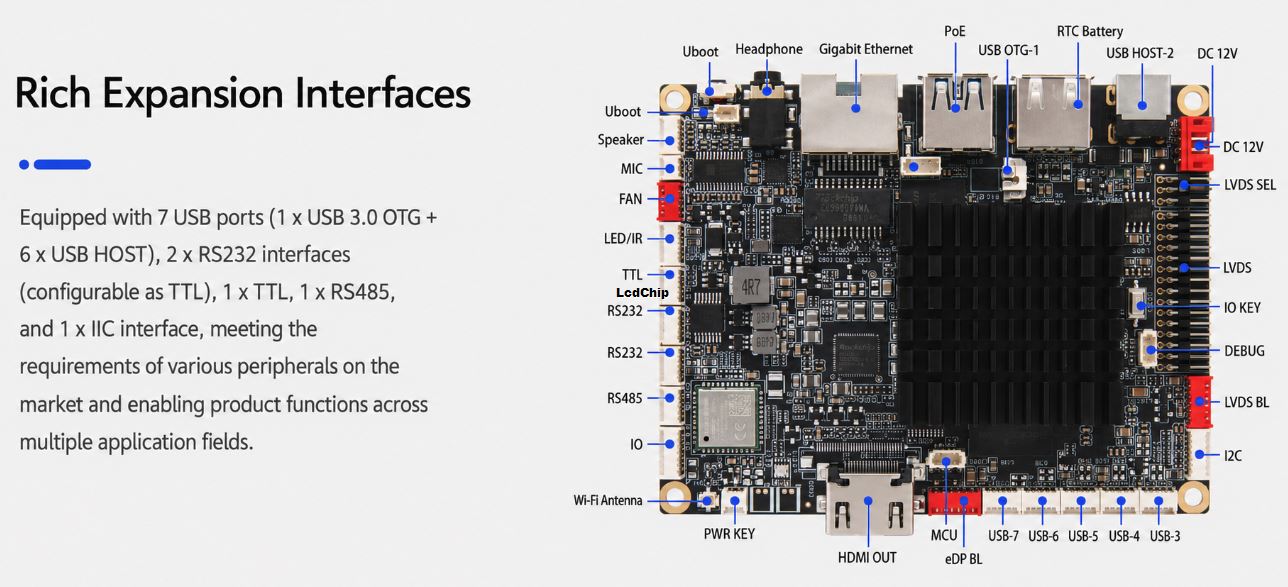
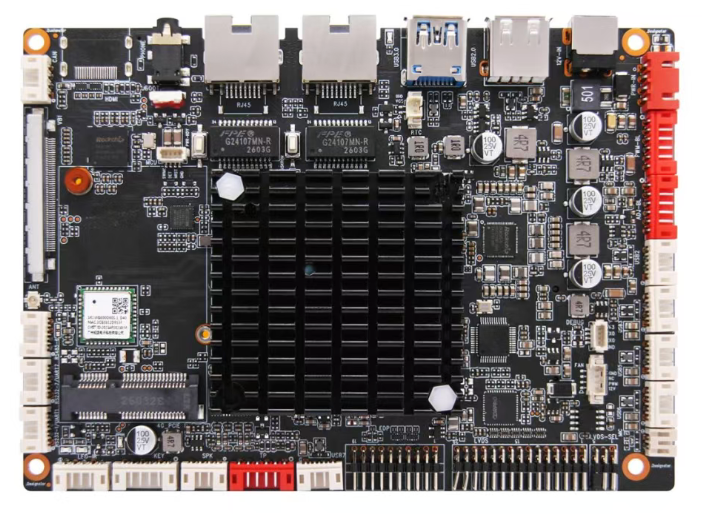
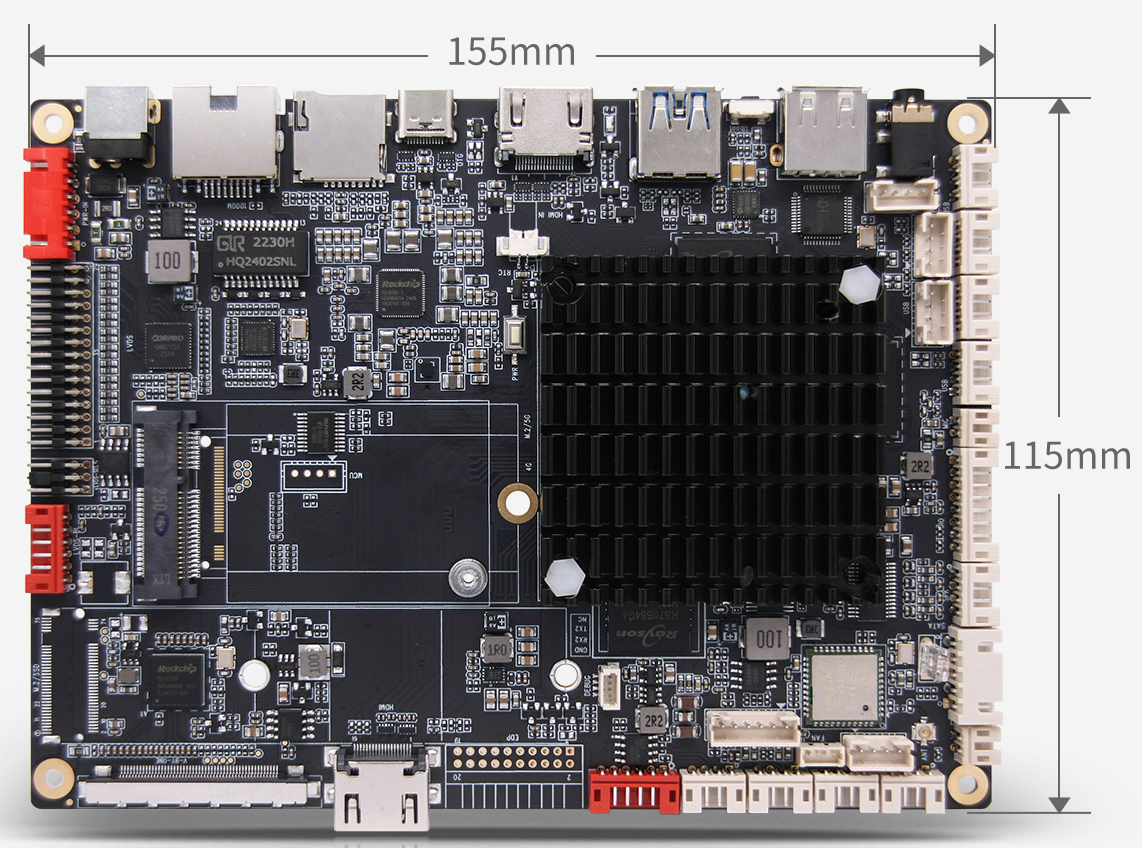
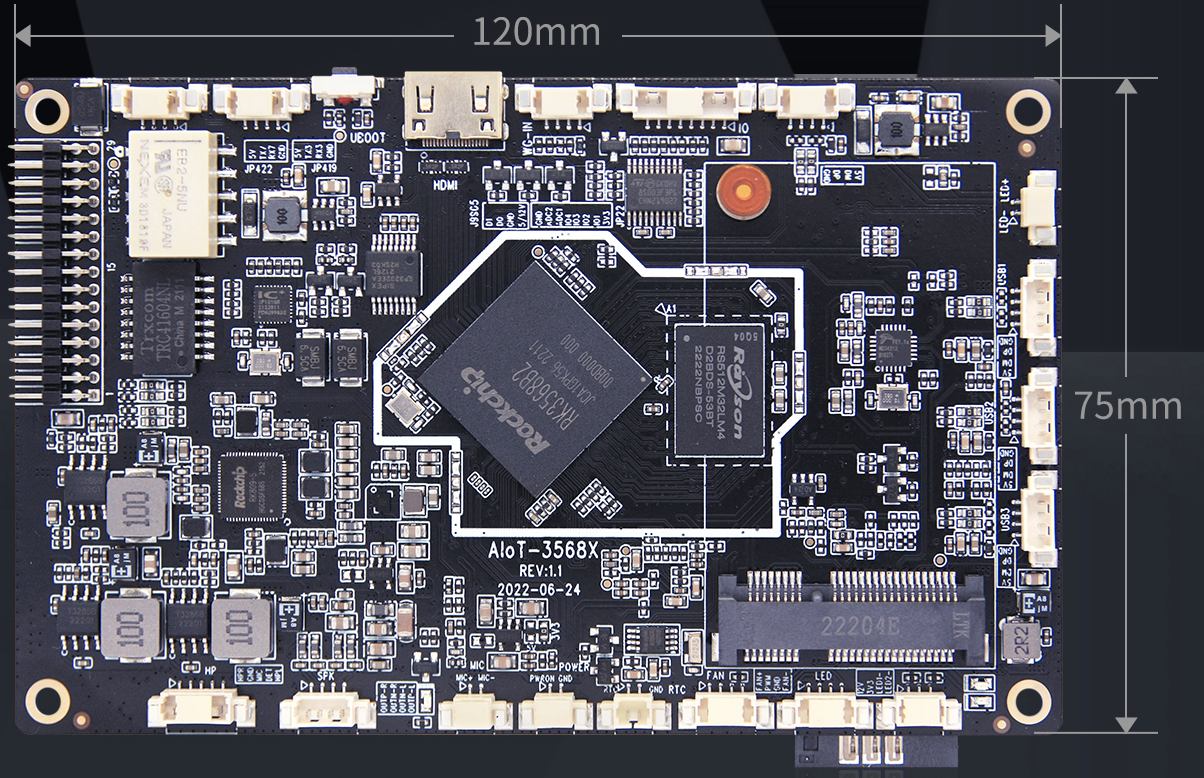
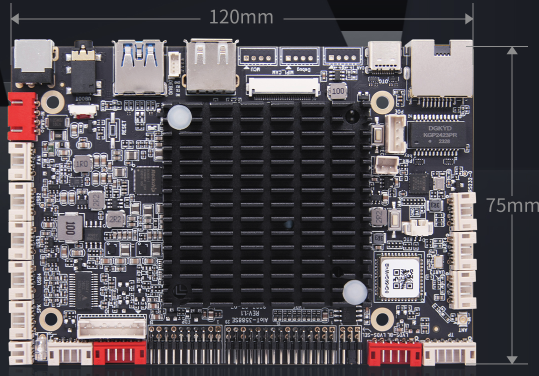
TIoT-3576SE Compact RK3576 AI Edge Controller Board Interface Diagram
Core Configuration
| Model | TIoT-3576SE |
|---|---|
| CPU | Rockchip RK3576 octa-core processor |
| Maximum CPU Frequency | Up to 2.2 GHz |
| NPU | Integrated neural processing unit providing up to 6 TOPS of AI computing performance |
| Operating System | Android 14.0 standard; OpenHarmony support available according to project requirements |
| Memory | 4 GB standard memory |
| Storage | 32 GB standard onboard storage |
Display Interfaces
| DisplayPort Output | 1 × DP output routed through the ribbon-connected Type-C OTG interface |
|---|---|
| DP Lane Configuration | Supports 1, 2 or 4 lanes |
| DP Link Rates | Supports 1.62, 2.7, 5.4 and 8.1 Gbps |
| Maximum DP Resolution | Up to 4K at 120 Hz |
| eDP Output | 1 × eDP output for directly driving compatible eDP LCD panels |
| MIPI DSI Output | 1 × MIPI DSI output supporting compatible LCD panels |
| Maximum MIPI Resolution | Up to 2560 × 1600 at 60 Hz |
| Dual-Screen Display | Supports compatible eDP and MIPI DSI screens displaying different content simultaneously |
USB and Expansion Interfaces
| Type-C OTG | 1 × Type-C OTG interface supporting compatible OTG and DisplayPort output functions |
|---|---|
| USB 3.0 | 1 × USB 3.0 HOST interface for high-speed storage, cameras and compatible peripherals |
| USB 2.0 | 3 × USB 2.0 HOST interfaces for scanners, touch devices, card readers and other peripherals |
| Serial Ports | 3 × TTL serial interfaces, configurable as RS232 according to the selected hardware configuration |
| I²C Interfaces | 2 × I²C interfaces for compatible touch panels, sensors and external peripherals |
| MIPI Camera | 1 × optional MIPI camera interface for compatible camera modules |
| CAN Bus | Optional CAN communication interface according to project requirements |
Network Support
| Gigabit Ethernet | 1 × 10/100/1000 Mbps auto-negotiation Ethernet interface |
|---|---|
| Fast Ethernet | 1 × 10/100 Mbps auto-negotiation Ethernet interface |
| Wi-Fi | Built-in Wi-Fi 5 |
| Bluetooth | Built-in Bluetooth 5.0 |
| Network Redundancy | Supports flexible wired and wireless networking for redundant or isolated communication applications |
Audio Configuration
| Speaker Output | Stereo left and right channel output with a default amplifier configuration of 2 × 6 W |
|---|---|
| Optional Speaker Output | Configurable up to 2 × 10 W through customized hardware resistor modification |
| Microphone Input | 1 × MIC IN interface |
| Headset Output | Supports one four-pole 3.5 mm headset interface routed through a cable connection |
Software and Development
| Android Version | Android 14.0 |
|---|---|
| OpenHarmony Support | OpenHarmony adaptation may be provided according to project requirements |
| AI Application Support | Supports compatible visual inspection, facial recognition, voice processing and edge AI applications |
| Peripheral Development | Supports integration with USB, serial, I²C, camera and network peripherals |
| Customized Development | System functions, hardware interfaces and software services may be customized according to project requirements |
Other Specifications
| Board Dimensions | 100 × 70 mm |
|---|---|
| RTC | Supports RTC real-time clock |
| System Upgrade | Supports local firmware upgrades via USB |
| Power Supply | 12 V DC, 3 A |
Typical Applications
- Smart self-checkout terminals
- Retail POS systems
- Electronic price tag controllers
- Industrial IoT gateways
- PLC control terminals
- Industrial HMI systems
- AI visual inspection equipment
- Voice recognition terminals
- Healthcare registration kiosks
- Hospital ward terminals
- Facial recognition access control
- Intelligent security monitoring hosts
Downloads
Related information