Hello! now
 tms@lcdchip.com


TIoT-3576E RK3576 AI Edge Computing Board with 6 TOPS NPU and 4K@120Hz Display
The TIoT-3576E is a high-performance AIoT controller board powered by the Rockchip RK3576 octa-core processor. It integrates a 6 TOPS NPU, Mali-G52 MC3 GPU, 4K at 120 Hz DisplayPort output, LVDS and eDP display interfaces, independent dual-screen display, seven USB ports, industrial serial interfaces, Gigabit Ethernet, Wi-Fi 6, Bluetooth 5.0 and PCI-E 4G expansion. The board is designed for edge computing, AI robotics, intelligent cloud terminals and high-performance AIoT devices.
Core Advantages
- Rockchip RK3576 octa-core processor
- Big.LITTLE architecture with 4 × Cortex-A72 and 4 × Cortex-A53
- Maximum CPU frequency up to 2.2 GHz
- Advanced 8 nm manufacturing process
- Integrated 6 TOPS dual-core NPU
- Android 14 and OpenHarmony support
- 4K at 120 Hz DisplayPort output
- LVDS and eDP display output
- Seven USB interfaces
- Wi-Fi 6, Bluetooth 5.0, Gigabit Ethernet and 4G
High-Performance Octa-Core Processor
The TIoT-3576E is powered by the Rockchip RK3576 octa-core processor with a Big.LITTLE architecture consisting of four Cortex-A72 cores and four Cortex-A53 cores. Its 8 nm process and maximum frequency of up to 2.2 GHz provide strong computing performance and efficient power consumption for multitasking applications.
Integrated 6 TOPS NPU
The integrated AI accelerator provides up to 6 TOPS of computing performance and supports INT4, INT8, INT16, FP16, BF16 and TF32 operations. Its dual NPU cores can operate together or independently for parallel multi-task and multi-scenario AI processing.
Transformer Hardware Acceleration
The NPU supports hardware acceleration for Transformer-based large-model architectures, helping improve the performance of compatible computer vision, speech processing, natural-language and edge inference applications.
Multiple AI Frameworks
The platform supports compatible AI models from TensorFlow, Caffe, TensorFlow Lite, PyTorch, ONNX, Android NN and other mainstream deep-learning frameworks.
Multiple Operating Systems
Android 14 is provided as the standard operating system. Linux OS and OpenHarmony can also be supported according to the selected firmware and project requirements.
4K at 120 Hz Ultra-HD Output
The DisplayPort signal is routed through the Type-C OTG interface. It supports 1, 2 or 4 lanes with link rates of 1.62, 2.7, 5.4 and 8.1 Gbps and a maximum output resolution of 4K × 2K at 120 Hz.
Mali-G52 MC3 Graphics Processing
The integrated Mali-G52 MC3 GPU supports efficient graphics rendering and image processing. Compatible image-enhancement functions include contrast adjustment, dithering, color enhancement and brightness improvement.
LVDS and eDP Display Support
One LVDS and one eDP interface can directly drive compatible LCD panels with resolutions up to 1920 × 1080 at 60 Hz. Standard LCD panels and customized cropped displays can be supported.
Independent Dual-Screen Display
Compatible DP, LVDS and eDP display combinations can show different content simultaneously, supporting operator screens, information displays and multi-screen intelligent terminals.
Seven USB Interfaces
- 1 × Type-C OTG interface
- 1 × USB 3.0 HOST interface
- 5 × USB 2.0 HOST interfaces
- USB camera and scanner support
- USB storage and input-device support
Industrial Serial Expansion
- 2 × RS232 interfaces configurable as TTL
- 1 × RS485 interface configurable as TTL
- 3 × TTL serial interfaces
- Two TTL ports configurable as RS232
- 4 × GPIO interfaces
- 1 × ADC interface
I²C Peripheral Support
One I²C interface supports compatible touch panels, sensors, control modules and other I²C peripherals for embedded terminal integration.
Wi-Fi 6 and Bluetooth 5.0
Built-in Wi-Fi 6 and Bluetooth 5.0 provide faster wireless transmission, reduced network latency and reliable peripheral connectivity through a compact single-antenna design.
Gigabit Ethernet
The Ethernet interface supports 10/100/1000 Mbps auto-negotiation, providing stable high-speed wired networking for AI data transfer, remote management, cloud communication and multimedia delivery.
PCI-E 4G Mobile Networking
The integrated PCI-E interface supports compatible 4G communication modules, allowing terminal equipment to access mobile networks where fixed Ethernet or Wi-Fi is unavailable.
Optional CAN Interface
An optional CAN communication interface can be provided for industrial automation, robotics, embedded control and other applications requiring reliable field-bus communication.
Optional MIPI Camera
An optional MIPI camera interface supports compatible camera modules for machine vision, facial recognition, visual inspection, image capture and intelligent security applications.
Android System Customization
Android system customization, hardware-control APIs and reference code can be provided to support upper-layer APP development, peripheral integration, AI deployment and customized terminal projects.
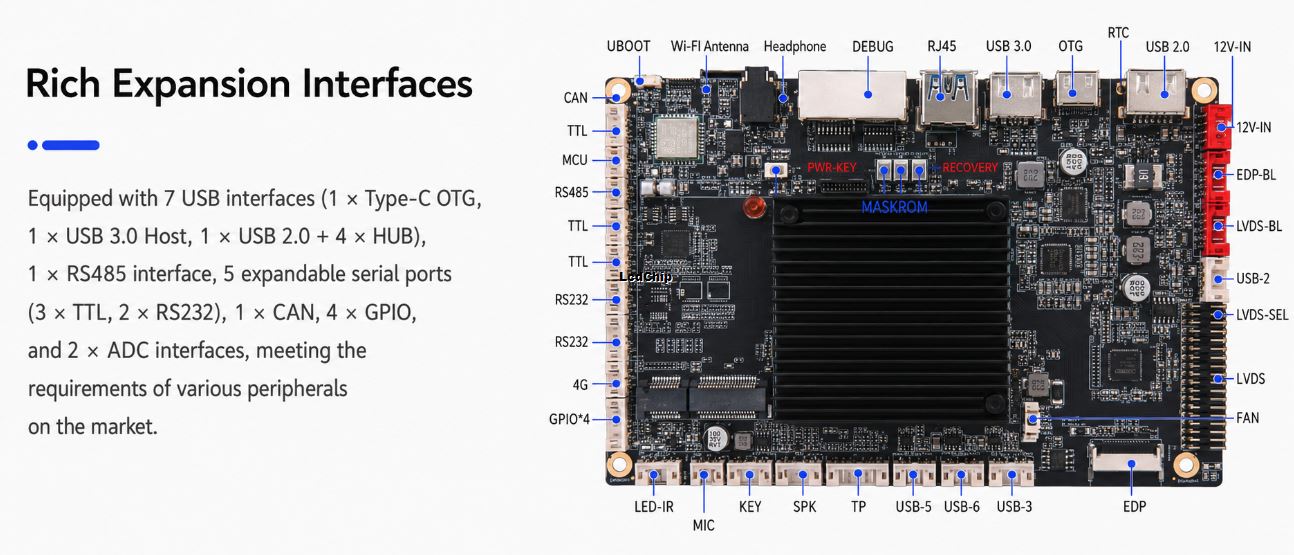
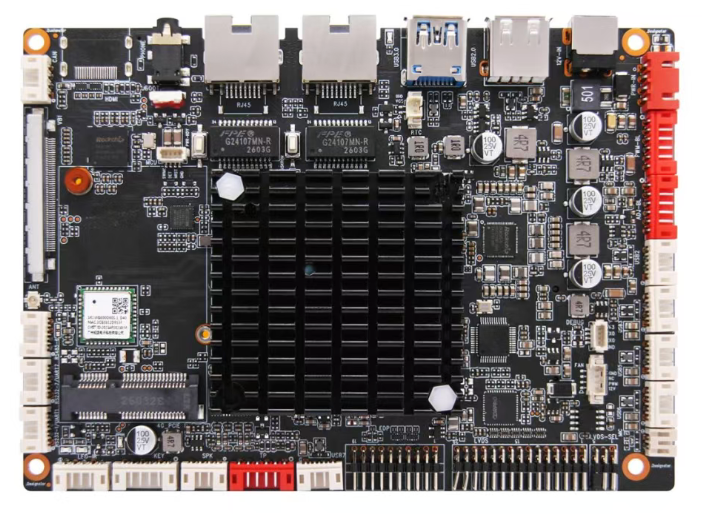
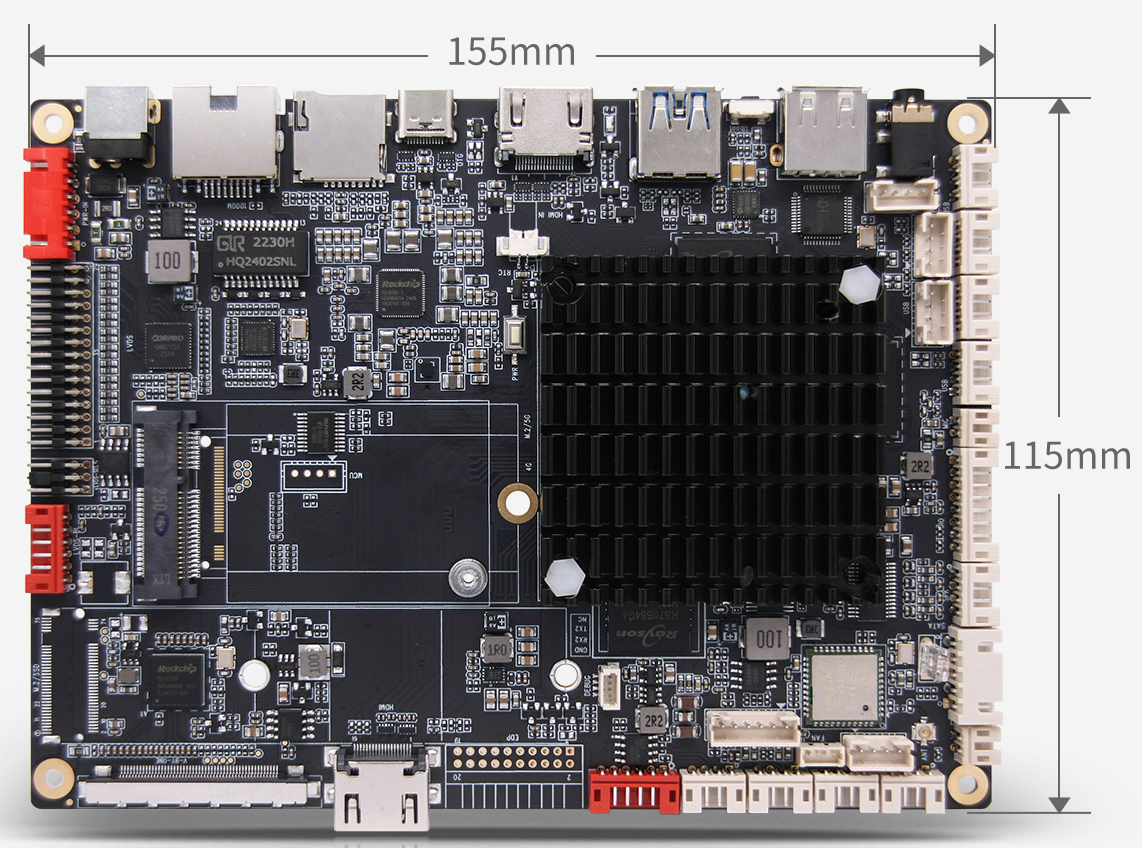
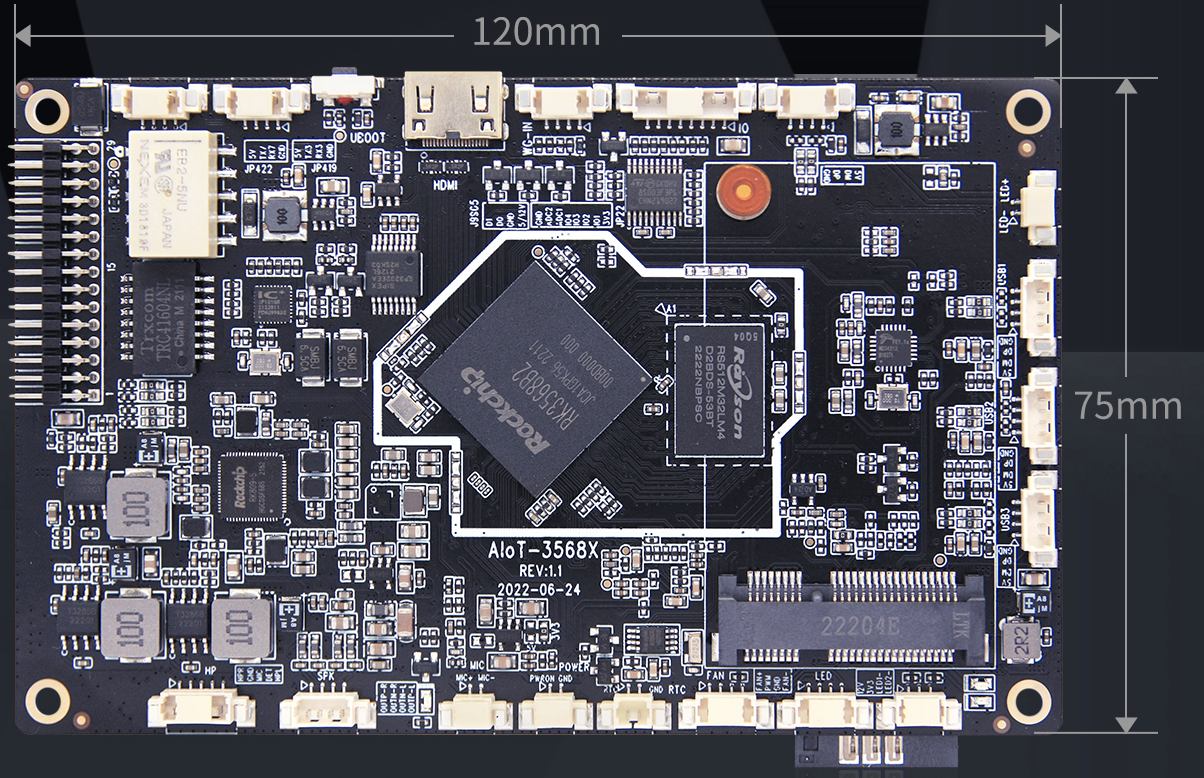
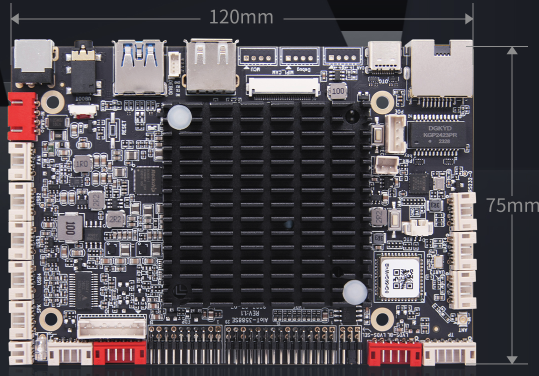
TIoT-3576E RK3576 AI Edge Computing Controller Board Interface Diagram
Core Configuration
| Model | TIoT-3576E |
|---|---|
| CPU | Rockchip RK3576 octa-core processor with 4 × Cortex-A72 and 4 × Cortex-A53 CPU cores |
| Maximum CPU Frequency | Up to 2.2 GHz |
| Process Technology | 8 nm |
| GPU | Integrated ARM Mali-G52 MC3 graphics processor |
| NPU | Integrated dual-core neural processing unit providing up to 6 TOPS of AI computing performance |
| AI Data Types | INT4, INT8, INT16, FP16, BF16 and TF32 |
| Operating System | Android 14.0 standard; Linux OS and OpenHarmony 6.0 support available according to project requirements |
| Memory | 4 GB standard memory |
| Storage | 32 GB standard onboard storage |
AI Computing Support
| NPU Architecture | Dual-core NPU supporting coordinated or independent operation |
|---|---|
| Parallel Processing | Supports compatible multi-task and multi-scenario parallel AI workloads |
| Transformer Acceleration | Supports hardware acceleration for compatible Transformer-based model architectures |
| Supported Frameworks | TensorFlow, Caffe, TensorFlow Lite, PyTorch, ONNX, Android NN and other compatible frameworks |
Display Interfaces
| DisplayPort Output | 1 × DP output routed through the Type-C OTG interface |
|---|---|
| DP Lane Configuration | Supports 1, 2 or 4 lanes |
| DP Link Rates | Supports 1.62, 2.7, 5.4 and 8.1 Gbps |
| Maximum DP Resolution | Up to 4K × 2K at 120 Hz |
| LVDS Output | 1 × LVDS output supporting single-channel or dual-channel 8-bit configurations for compatible 50 Hz or 60 Hz LCD panels |
| Maximum LVDS Resolution | Up to 1920 × 1080 at 60 Hz |
| eDP Output | 1 × eDP output for directly driving compatible eDP LCD panels |
| Maximum eDP Resolution | Up to 1920 × 1080 at 60 Hz |
| Dual-Screen Display | Supports compatible display combinations showing different content on two screens |
USB and Expansion Interfaces
| Type-C OTG | 1 × Type-C OTG interface supporting compatible OTG and DisplayPort output functions |
|---|---|
| USB 3.0 | 1 × USB 3.0 HOST interface for high-speed storage, cameras and compatible peripherals |
| USB 2.0 | 5 × USB 2.0 HOST interfaces for scanners, touch devices, card readers and other external peripherals |
| RS232 Interfaces | 2 × RS232 interfaces configurable as TTL |
| RS485 Interface | 1 × RS485 interface configurable as TTL |
| TTL Interfaces | 3 × TTL interfaces, with two ports configurable as RS232 |
| GPIO | 4 × GPIO interfaces |
| ADC | 1 × ADC interface |
| I²C Interface | 1 × I²C interface for compatible touch panels, sensors and other I²C peripherals |
Optional Interfaces
| CAN Interface | 1 × optional CAN communication interface |
|---|---|
| MIPI Camera | 1 × optional MIPI camera interface for compatible camera modules |
Network Support
| Wi-Fi | Built-in Wi-Fi 6 with single-antenna configuration |
|---|---|
| Bluetooth | Built-in Bluetooth 5.0 |
| Ethernet | Supports 10/100/1000 Mbps auto-negotiation Gigabit Ethernet |
| Mobile Network | Supports compatible PCI-E 4G communication modules for mobile network access |
Audio Configuration
| Speaker Output | Stereo left and right channel output with a default amplifier configuration of 2 × 6 W |
|---|---|
| Optional Speaker Output | Configurable up to 2 × 10 W through customized hardware resistor modification |
| Microphone Input | 1 × MIC IN interface |
| Headset Output | 1 × four-pole 3.5 mm headset interface |
Software and Development
| Android Customization | Supports customized Android system functions, boot interfaces and hardware control |
|---|---|
| Linux Support | Linux system adaptation may be provided according to project requirements |
| OpenHarmony Support | OpenHarmony 6.0 adaptation may be provided according to the selected configuration |
| API Support | System APIs and reference code can be provided for secondary application development |
| APP Development | Supports upper-layer APP development, peripheral control, AI model deployment and customized software integration |
Other Specifications
| Board Dimensions | 146 × 104 mm |
|---|---|
| RTC | Supports RTC real-time clock |
| System Upgrade | Supports local firmware upgrades via USB |
| Power Supply | 12 V DC, 3 A |
| Remote Control | Infrared remote control supported |
Typical Applications
- AI edge computing terminals
- AI robots and service robots
- AI cloud terminal servers
- Machine vision systems
- Industrial IoT gateways
- Smart retail terminals
- Visual inspection equipment
- Facial recognition terminals
- Voice recognition systems
- Intelligent security equipment
- Industrial control terminals
- High-performance edge AIoT devices
Downloads
Related information