 Hello! now
 tms@lcdchip.com



Analog Devices Inc./Maxim Integrated MAX66240ESA+
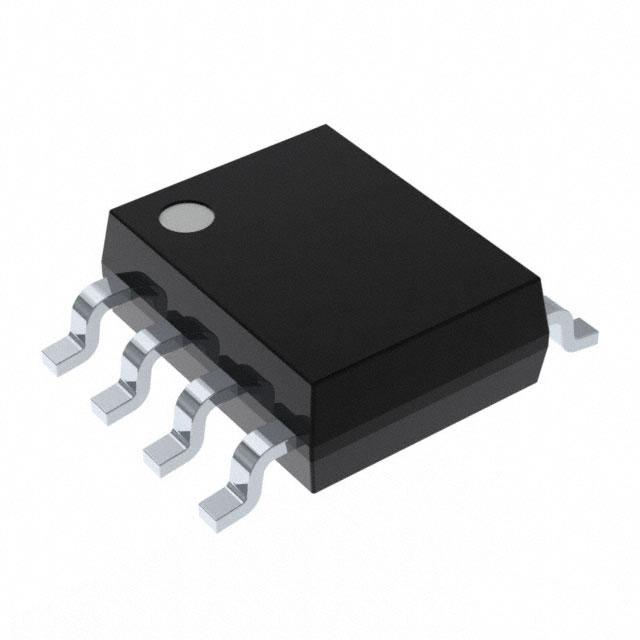
- Part No.:
- MAX66240ESA+
- Manufacturer:
- Analog Devices Inc./Maxim Integrated
- Category:
- Specialized ICs
- Package:
- 8-SOIC (0.154", 3.90mm Width)
- Description:
- IC AUTHENTICATION CHIP 8SOIC
- Quantity:
Unit Price:$0
Ext Price:$0
- Payment:

- Shipping:


Product Details
MAX66240ESA+ - RF Secure Authenticator with SHA-256 and 4-Kbit EEPROM
MAX66240ESA+ is a Maxim Integrated, now Analog Devices, batteryless RF secure authenticator with an ISO/IEC 15693-compatible front end, SHA-256 authentication engine and 4096 bits of user EEPROM. The exact ESA+ order code denotes the industrial-temperature, lead-free 8-pin narrow-SOIC version.
Its two active package connections attach to an RF antenna; they are not an I²C host interface.
Overview
The MAX66240 combines a 13.56-MHz contactless transponder, a factory-programmed 64-bit ROM identifier, user-programmable protected EEPROM and a hardware SHA-256 engine. A reader can use challenge-based message authentication to verify the tag and control protected memory operations. The SOIC package is intended for connection to a suitable external antenna.
Key Advantages
The RF front end supports ISO/IEC 15693 and ISO 18000-3 Mode 1-compatible communication.
The SHA-256 engine generates message authentication codes using a device secret and challenge.
Sixteen 256-bit EEPROM pages offer configurable read, write and authentication protection.
A factory-programmed 64-bit ROM ID uniquely identifies the device for supported operations.
Feature Summary
The transponder operates from a suitable reader field without a separate battery connection.
User EEPROM supports programmable protection, including OTP/EPROM-emulation options.
The manufacturer lists ISO/IEC 15693 data rates up to 26 kbps.
ESA+ specifies the -40 C to +85 C, 8-pin SOIC lead-free variant; the +T suffix is the tape-and-reel form.
Package & Footprint
The manufacturer's ordering table lists MAX66240ESA+ as an 8-pin SO package, -40 C to +85 C. Its package table identifies a 150-mil SOIC body; LCDChip registers this as 8-SOIC (0.154", 3.90 mm width). Confirm the controlled S8+2 outline and land pattern before PCB release.

- Route antenna nodes AC1 and AC2 according to the RF matching design.
- Observe the controlled pin-one orientation and keep D.N.C. pins unconnected.
- Validate the antenna and enclosure with the intended reader field.
This generic JPG illustrates the package shape, not the device-specific pinout.
Pin Functions
For the 8-pin SOIC, the manufacturer assigns AC2 to pin 2 and AC1 to pin 3 as the two antenna connections. Pins 1 and 4 through 8 are marked D.N.C. (do not connect). These pins are not power, ground, SCL or SDA connections; use the manufacturer's SO top-view drawing for layout orientation.
Key Specifications
| Function | Contactless secure authenticator |
|---|---|
| RF interface | ISO/IEC 15693 / ISO 18000-3 Mode 1 compatible |
| Carrier frequency | 13.553 to 13.567 MHz |
| RF data rate | Up to 26 kbps |
| User EEPROM | 4096 bits, sixteen 256-bit pages |
| Authentication engine | SHA-256 message authentication |
| Factory ROM ID | 64 bits |
| Antenna pins | AC2 pin 2; AC1 pin 3 |
| Temperature grade | -40 C to +85 C |
| Package | 8-pin 150-mil SOIC, lead-free |
| Package-only form | ESA+; +T denotes tape and reel |
RF, endurance and timing specifications depend on the manufacturer's stated test conditions and reader field; consult the controlled data sheet.
Replacement Considerations
A same-size SOIC secure device is not an automatic replacement. Compare antenna connections, ISO 15693 command behavior, secret provisioning, EEPROM page protection, ROM-ID use, operating temperature, package and reader firmware. The related MAX66242 adds an I²C interface and is not assumed pin-compatible. No unverified internal substitute link is asserted.
Manufacturer Information
Maxim Integrated's MAX66240 data sheet, 219-0042 Rev. 5, lists the exact MAX66240ESA+ order code, SO pin assignments, 4-Kbit EEPROM organization, RF characteristics and published ISO 15693 timing errata. Analog Devices now hosts the manufacturer document and lists the product as not recommended for new designs.
Applications
Authenticate tagged equipment and maintain protected item data.
Support challenge-based verification in a compatible reader system.
Protect configuration records for authenticated replaceable parts.
Associate protected calibration or identity records with accessories, subject to system qualification.
Quality & Authenticity
Check the complete MAX66240ESA+ order code, SOIC marking, lot documentation and traceability. Device identity, secret installation and protected-memory settings require controlled functional checks; package markings alone do not prove a provisioned authentication state.
FAQ
Does the SOIC provide an I²C port?
No. Pins 2 and 3 connect to the RF antenna; the other pins are marked do not connect.
How much user memory is available?
4096 bits arranged as sixteen 256-bit pages.
What distinguishes ESA+ from ESA+T?
Both are 8-pin SOIC industrial-temperature forms; +T denotes tape-and-reel delivery.
Is every ISO 15693 reader automatically compatible?
No. Review the manufacturer's documented protocol timing errata and test the intended reader.
Engineering Notice
The manufacturer data sheet documents two ISO 15693-3 timing noncompliances concerning response timing after carrier modulation and the inventory-slot EOF interval. Validate those errata with the chosen reader and firmware. Use the controlled data sheet, antenna design information and package drawing for final qualification; SHA-256 capability alone is not a system-level security certification.
MAX66240ESA+ Information
- Specifications
- Tags
- Product attributes
- Attribute value
- Manufacturer:
- Analog Devices Inc./Maxim Integrated
- Series:
- DeepCover®
- Package/Case:
- 8-SOIC (0.154", 3.90mm Width)
- Packaging:
- Tube
- Product Status:
- Active
- Programmable:
- Not Verified
- Type:
- Authentication Chip
- Applications:
- Medical
- Mounting Type:
- Surface Mount
- Supplier Device Package:
- 8-SOIC
- Grade:
- -
- Qualification:
- -
- Include Parts
- Popular Search
The following parts include "MAX66240ESA+" in Silicon Labs MAX66240ESA+.
- Part Number
- Manufacturer
- Package
- Description
- CAP200DG-TL Power Integrations 8-SOIC (0.154", 3.90mm Width) IC AUTOMATIC DISCHARGE 8SO
- ATSHA204A-MAHDA-T Microchip Technology 8-UFDFN Exposed Pad IC AUTHENTICATION CHIP 8UDFN
- ATSHA204A-SSHDA-T Microchip Technology 8-SOIC (0.154", 3.90mm Width) IC AUTHENTICATION CHIP 8SOIC
- ATSHA204A-STUCZ-T Microchip Technology TO-236-3, SC-59, SOT-23-3 IC AUTHENTICATION CHIP SOT23-3
- ATECC608B-MAHDA-T Microchip Technology 8-UFDFN Exposed Pad IC AUTHENTICATION CHIP 8UDFN
- ATECC608B-MAHCZ-S Microchip Technology 8-UFDFN Exposed Pad IC AUTHENTICATION CHIP 8UDFN
- ATECC608B-SSHDA-T Microchip Technology 8-SOIC (0.154", 3.90mm Width) IC AUTHENTICATION CHIP 8SOIC
- ATECC608B-MAHDA-S Microchip Technology 8-UFDFN Exposed Pad IC AUTHENTICATION CHIP 8UDFN
- ATECC608A-MAHDA-S Microchip Technology 8-UFDFN Exposed Pad IC AUTHENTICATION CHIP 8UDFN
- ATECC608B-MAVDA-T Microchip Technology 8-UFDFN Exposed Pad IC AUTHENTICATION CHIP 8UDFN
The following parts are popular search parts in Test and Measurement.
Inventory:2,955
Please send an inquiry. Send us your inquiry, and we will respond immediately.


