Hello! now
 tms@lcdchip.com


TIoT-3568S RK3568 4K Dual-Screen AIoT Controller Board with 1 TOPS NPU
The TIoT-3568S is a compact AIoT controller board powered by the Rockchip RK3568 quad-core Cortex-A55 processor. It integrates a 1 TOPS RKNN NPU, Mali-G52 GPU, 4K HDMI output, LVDS, eDP and MIPI display interfaces, dual-screen independent display support, an 8MP MIPI camera interface, seven USB ports, industrial serial interfaces, Wi-Fi, Bluetooth and Ethernet connectivity. It is suitable for smart retail, healthcare, education, self-service terminals and commercial display equipment.
Core Advantages
- Compact 126 × 90 mm board design
- Rockchip RK3568 quad-core Cortex-A55 processor
- Maximum CPU clock speed up to 2.0 GHz
- Integrated 1 TOPS RKNN NPU
- Android 11 operating system
- Optional Linux and OpenHarmony support
- 4K HDMI, LVDS, eDP and MIPI output
- Dual-screen independent display support
- 8MP MIPI camera support
- Seven USB and four serial interfaces
Ultra-Thin Compact Design
The TIoT-3568S adopts a compact board design measuring only 126 × 90 mm. It can be integrated into advertising displays, electronic class signs, medical information displays and self-service terminals with limited internal installation space.
RK3568 Quad-Core Processor
The Rockchip RK3568 integrates four 64-bit ARM Cortex-A55 CPU cores with a maximum frequency of up to 2.0 GHz. Its advanced 22 nm process provides efficient performance, reduced power consumption and lower operating heat.
Advanced Graphics Processing
The integrated dual-core Mali-G52 GPU supports OpenGL ES 3.2, 2.0 and 1.1 as well as Vulkan 1.1. High-performance 2D acceleration hardware improves graphics rendering and user-interface performance.
4K Video Decoding
The high-performance VPU supports H.265, H.264 and VP9 video decoding at resolutions up to 4K at 60 fps. It also supports H.265 and H.264 video encoding at up to 1920 × 1080 at 60 fps.
Multiple Display Interfaces
HDMI, LVDS, eDP and MIPI display interfaces are available for connecting different types of commercial LCD panels. The HDMI output supports resolutions up to 4K × 2K at 60 Hz.
Dual-Screen Independent Display
Compatible display combinations can support two screens showing different content, meeting the requirements of customer-facing displays, operator screens and multi-screen intelligent terminal systems.
Mainstream Touch-Screen Support
The board supports infrared, optical, capacitive, resistive and touch-film solutions. Compatible HID touch screens support driver-free plug-and-play operation without complicated debugging.
Integrated 1 TOPS AI Accelerator
The integrated RKNN NPU provides up to 1 TOPS of AI computing performance. It supports compatible lightweight edge AI models and frameworks for image recognition, intelligent analysis and terminal-side inference.
8MP MIPI Camera Support
One MIPI camera input supports compatible camera modules with resolutions up to 8 megapixels. It can be used for image capture, identity verification, attendance management and intelligent visual applications.
Seven USB Interfaces
- 1 × USB 3.0 interface
- 6 × USB 2.0 interfaces
- USB storage device support
- Camera and scanner support
- Keyboard, touch and peripheral support
Rich Industrial Expansion
- 2 × RS232 serial ports
- 2 × TTL serial ports
- 1 × I²C touch-panel interface
- GPIO expansion interfaces
- ADC input interface
Flexible Network Communication
The TIoT-3568S supports 10/100 Mbps auto-negotiation Ethernet, built-in Wi-Fi and Bluetooth 4.2, providing stable wired and wireless connectivity for content updates, remote management and terminal data transmission.
Android and Linux Support
Android 11 is provided as the standard operating system. Linux and OpenHarmony adaptation may also be provided according to project requirements, offering flexible software deployment.
System Customization
Android system customization, system APIs and reference code can be provided to support upper-layer APP development, peripheral control, hardware integration and project-specific software deployment.
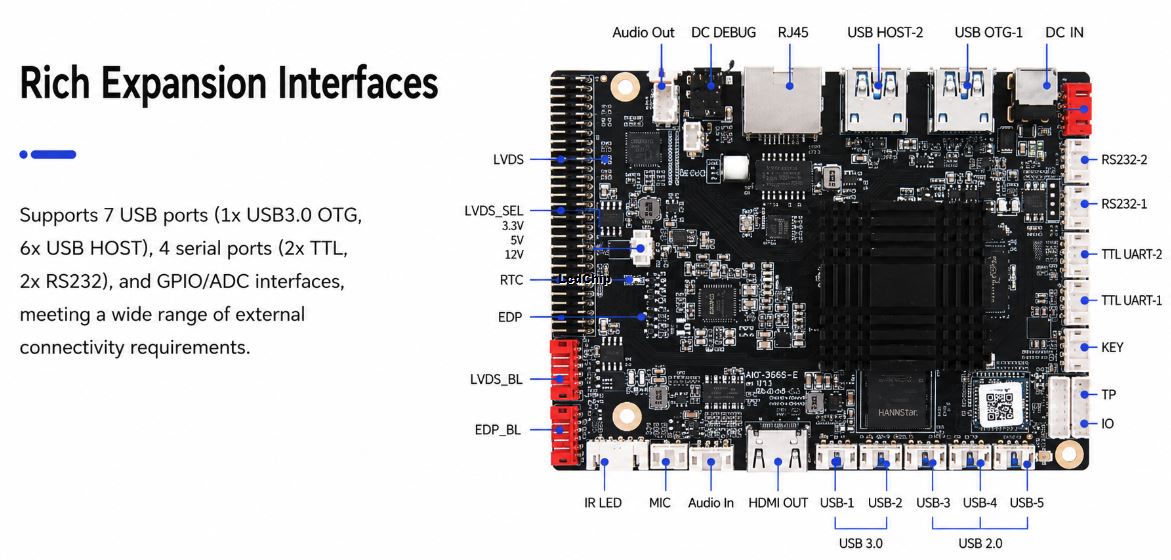
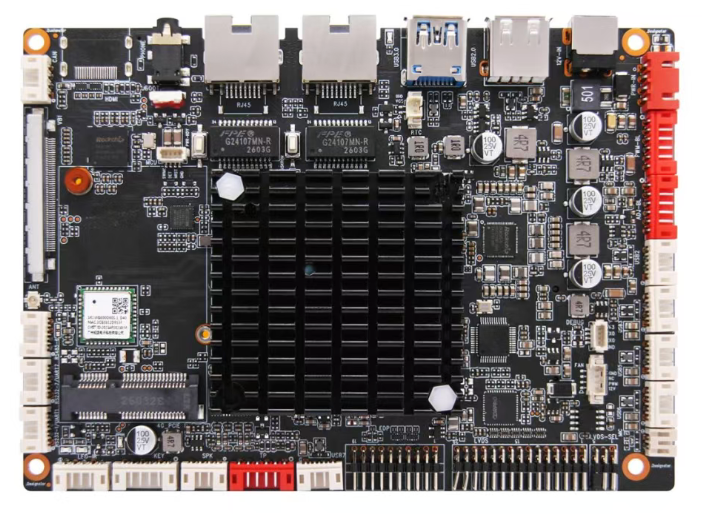
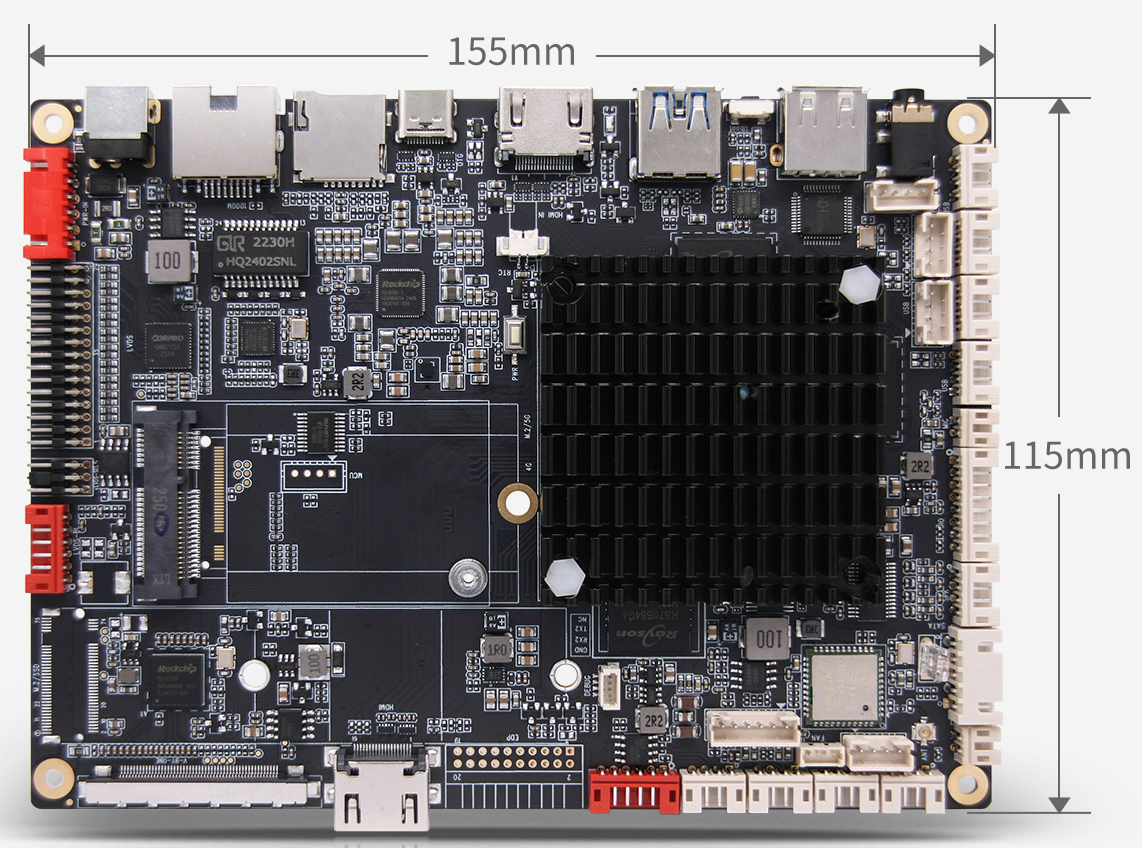
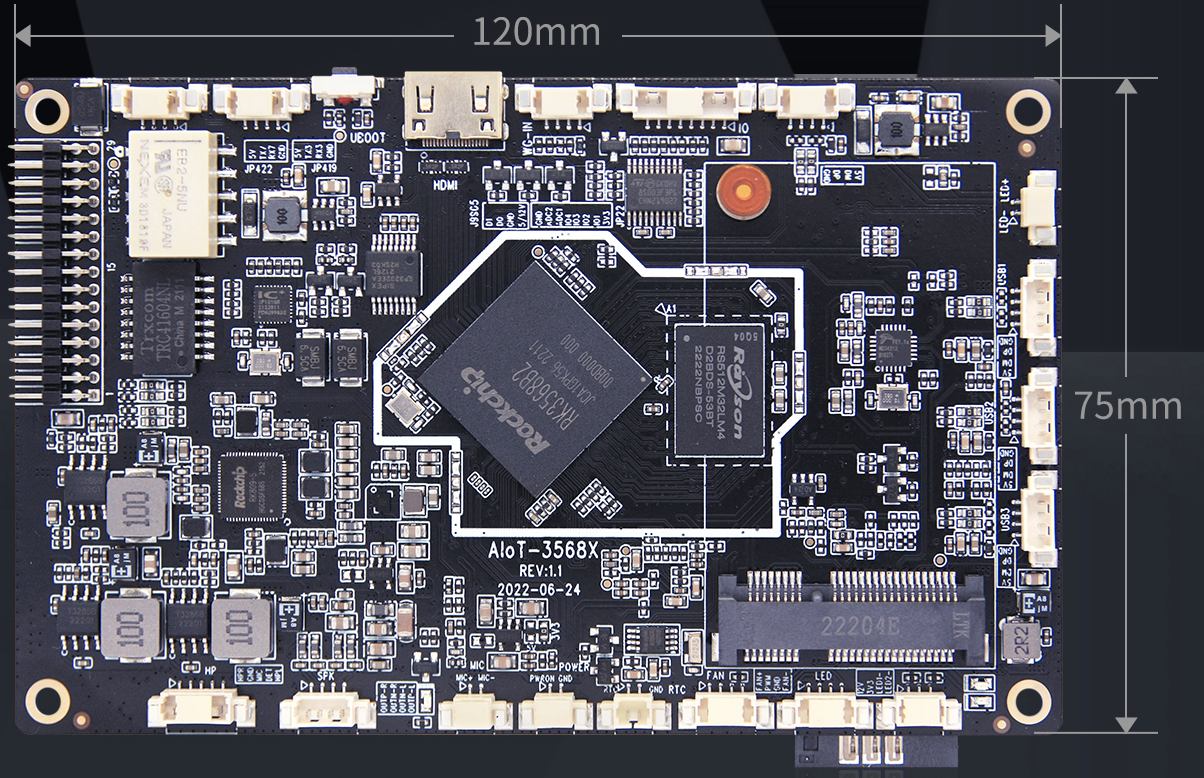
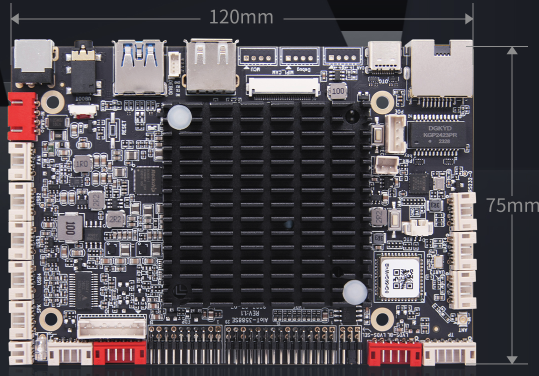
TIoT-3568S 4K Dual-Screen AIoT Controller Board Interface Diagram
Core Configuration
| Model | TIoT-3568S |
|---|---|
| CPU | Rockchip RK3568 64-bit quad-core processor with 4 × ARM Cortex-A55 cores |
| Maximum CPU Frequency | Up to 2.0 GHz |
| Process Technology | 22 nm |
| GPU | Dual-core ARM Mali-G52 GPU supporting OpenGL ES 3.2/2.0/1.1 and Vulkan 1.1 |
| NPU | Integrated RKNN neural processing unit providing up to 1 TOPS of AI computing performance |
| Operating System | Android 11.0 standard; Linux and OpenHarmony support available according to project requirements |
| Memory | 2 GB standard memory |
| Storage | 64 GB standard onboard storage |
Video Processing
| Video Decoding | Supports H.265, H.264 and VP9 video decoding at resolutions up to 4K at 60 fps |
|---|---|
| Video Encoding | Supports H.265 and H.264 video encoding at up to 1920 × 1080 at 60 fps |
| 2D Acceleration | Integrated high-performance 2D graphics acceleration hardware |
Display Interfaces
| HDMI Output | 1 × standard Type-A HDMI output supporting resolutions up to 4K × 2K at 60 Hz |
|---|---|
| LVDS Output | 1 × LVDS output supporting single-channel or dual-channel 6-bit and 8-bit configurations for compatible 50 Hz or 60 Hz LCD panels |
| Maximum LVDS Resolution | Up to 1920 × 1080 |
| eDP Output | 1 × eDP output for directly driving compatible eDP interface LCD panels |
| MIPI Output | 1 × MIPI display output for directly driving compatible MIPI interface LCD panels |
| Dual-Screen Display | Supports compatible dual-screen configurations with different content displayed on each screen |
| Touch-Screen Support | Supports compatible infrared, optical, capacitive, resistive and touch-film solutions |
| HID Touch Support | Supports plug-and-play operation with compatible driver-free HID touch-screen devices |
Camera Support
| MIPI Camera Input | 1 × MIPI camera input for connecting compatible high-definition camera modules |
|---|---|
| Maximum Camera Resolution | Up to 8 megapixels |
| Typical Camera Functions | Image capture, identity verification, attendance, intelligent recognition and visual terminal applications |
Expansion Interfaces
| USB 3.0 | 1 × USB 3.0 interface for high-speed storage, cameras and compatible peripherals |
|---|---|
| USB 2.0 | 6 × USB 2.0 interfaces for scanners, keyboards, touch devices, USB storage and other peripherals |
| RS232 Interfaces | 2 × RS232 serial communication interfaces |
| TTL Interfaces | 2 × TTL serial communication interfaces |
| I²C / TP Interface | 1 × I²C interface for connecting a compatible touch panel or other I²C peripheral |
| GPIO | GPIO expansion interfaces for external signal input, output and equipment control |
| ADC | ADC interface for compatible analog signal input applications |
| USB Storage | Supports USB flash drives for media storage, file transfer and local system upgrades |
Network Support
| Wi-Fi | Built-in Wi-Fi |
|---|---|
| Bluetooth | Built-in Bluetooth 4.2 |
| Ethernet | Supports 10/100 Mbps auto-negotiation Ethernet |
Audio Configuration
| Speaker Output | Stereo left and right channel speaker output with a default integrated amplifier output of 2 × 6 W |
|---|---|
| Optional Speaker Output | Configurable up to 2 × 10 W through a customized hardware resistor configuration |
| Microphone Input | 1 × MIC IN interface |
| Headphone Output | 1 × headphone interface supporting compatible three-pole or four-pole plugs |
Software and Development
| Android Customization | Supports customized Android system functions according to project requirements |
|---|---|
| Linux Support | Linux system adaptation may be provided according to the selected project configuration |
| OpenHarmony Support | OpenHarmony adaptation may be provided according to project requirements |
| API Support | System APIs and reference code can be provided for secondary application development |
| APP Development | Supports upper-layer APP development, peripheral control, AI function integration and customized software deployment |
Other Specifications
| Board Dimensions | 126 × 90 mm |
|---|---|
| RTC | Supports RTC real-time clock |
| System Upgrade | Supports local firmware upgrades via USB flash drive |
| Power Supply | 12 V DC, 3 A |
| Remote Control | Infrared remote control supported |
Typical Applications
- Commercial advertising displays
- Intelligent self-service terminals
- Electronic classroom signs
- Smart attendance terminals
- Outpatient information displays
- Operating room control displays
- Smart retail equipment
- Smart healthcare terminals
- Government service terminals
- Smart education equipment
- Interactive information kiosks
- Edge AIoT devices
Downloads
Related information