Hello! now
 tms@lcdchip.com



Production Security Architecture for Edge AI Terminals: Secure Boot, Signed OTA, Device Identity, SBOM and Fleet Recovery
SECURE EDGE SYSTEMS | EMBEDDED AI | PRODUCTION ENGINEERING
An edge AI terminal is no longer just a motherboard, display and application. Once the device is deployed in a hotel, hospital, factory, retail site, gym, public-service location or industrial facility, it becomes a long-lived connected computing system that must continue to boot trusted software, receive secure updates, protect credentials and recover from failed releases.
That changes the engineering question.
Instead of asking only whether the terminal supports Android, Linux, 4K display, cameras, AI inference and Ethernet, engineering teams should also ask: How does the device know that the software it boots is authentic? Who is allowed to update it? What happens if an update fails? How is each device uniquely identified? How can a vulnerable software component be located across thousands of deployed units?
CORE ENGINEERING PRINCIPLE
Security must form a chain from manufacturing to boot, update, runtime and field recovery.
A secure bootloader cannot compensate for an unprotected OTA server. A signed update cannot compensate for one shared device password. An SBOM cannot compensate for a manufacturer that has no vulnerability-response process.
01. Start With a Threat Model, Not a Security Feature List
Security architecture should begin by defining what must be protected and from whom.
A commercial AI terminal may contain customer credentials, device certificates, cloud API tokens, Wi-Fi configuration, locally stored AI models, camera streams, voice data, business records, diagnostic logs and remote-management services.
The attacker may not need to break the AI model. Compromising the update mechanism, obtaining a shared factory password or replacing the system image may provide a much easier path.
Representative Attack Surfaces
- Modified or unauthorized boot images
- Downgrade to an older vulnerable firmware release
- Compromised OTA update packages
- Stolen update-signing credentials
- Shared passwords across multiple devices
- Exposed UART, ADB, SSH or debugging interfaces
- Unauthorized access to device APIs
- Modified AI model or configuration files
- Malicious USB peripherals
- Unpatched third-party software components
- Compromised remote-management credentials
- Loss or physical theft of a deployed device
Design rule: Every security mechanism should correspond to a defined threat. Adding encryption, certificates or secure boot without defining the threat model often produces complexity without creating a complete trust architecture.
02. Build a Chain of Trust From Power-On
The first objective is to prevent the terminal from silently booting software that has been modified or replaced by an unauthorized party.
A typical secure boot chain can be represented as:
Hardware Root of Trust
Immutable or hardware-protected verification anchor.
↓
Boot ROM / First-Stage Loader
Authenticates the next executable stage.
↓
Bootloader
Verifies the kernel, device tree and other boot components.
↓
Operating System
Validates protected system partitions and security policy.
↓
Application / AI Runtime / Model Assets
The important concept is transitive trust: each stage should authenticate the next stage before transferring execution.
Android: Verified Boot
Android Verified Boot provides a framework for verifying executable code and protected partitions from a hardware-backed root of trust through the boot process.
For production devices, engineers should review:
- Bootloader lock state
- OEM signing-key ownership
- VBMeta configuration
- Verified partition coverage
- Rollback protection
- Recovery behavior after verification failure
- Factory and engineering-image separation
Embedded Linux: Signed FIT Images
Linux products using U-Boot can implement verified boot using signed FIT configurations or other platform-specific verified-boot mechanisms.
A cryptographic signature provides something a simple checksum cannot: evidence that the image was authorized by the holder of the signing key.
Common mistake: calculating SHA-256 for a firmware image and calling the system "secure boot." A hash detects modification, but unless the expected hash or manifest is itself securely authenticated, an attacker may replace both the image and its hash.
03. Signed Software Is Not Enough: Prevent Rollback
Imagine firmware version 4 fixes a critical vulnerability found in version 2.
If version 2 is still correctly signed, signature verification alone may consider it authentic. An attacker who can reinstall the old release may therefore restore the known vulnerability.
This is why production secure boot and OTA systems should evaluate anti-rollback or rollback-protection mechanisms.
A Robust Release Decision Should Verify
- Is the image signed by an approved key?
- Is the package intact?
- Is the device model compatible?
- Is the hardware revision compatible?
- Is the release version permitted?
- Does the update violate the minimum accepted security version?
- Is the installed bootloader capable of supporting the new release?
Android Verified Boot includes rollback-protection concepts specifically to prevent a device from remaining on or returning to vulnerable older versions when configured correctly.
04. OTA Should Be Designed as a Transaction
A firmware update should not be treated as "download a file and reboot."
A commercial OTA system is closer to a transaction with preparation, authentication, installation, verification, health checking and commit or rollback.
Recommended OTA State Machine
- Discover. Determine whether a release is intended for this device group.
- Authenticate. Verify the signed update manifest.
- Check compatibility. Hardware, bootloader, storage and dependency checks.
- Download. Resume-capable package transfer.
- Verify package. Validate digest and digital signature.
- Stage. Install into an inactive slot or snapshot environment where supported.
- Reboot. Boot the candidate release.
- Health check. Confirm critical services and peripherals are functional.
- Commit. Mark the update successful.
- Rollback. Restore the previously validated state if the candidate release fails.
Why A/B Update Architecture Matters
A/B-style update mechanisms maintain a recoverable system while a new software version is being installed. Android Virtual A/B extends this concept using snapshots and supports automatic rollback when a new operating system fails to boot successfully.
For embedded Linux products, a similar principle can be implemented with dual root filesystems, recovery partitions, snapshot-based systems or an appropriately designed update framework.
Test Power Loss at Every Update Stage
One of the highest-value validation methods is intentionally removing power during:
- Manifest download
- Firmware download
- Image write
- Boot-slot selection
- First boot
- Health-check execution
- Commit operation
After every interruption, the device should either continue the update safely or return to a known-good operating state.
Production rule: Never qualify OTA only by testing a successful update. The important engineering cases are failed downloads, insufficient storage, corrupted images, power interruption, bad releases and recovery.
05. Separate the Update Signing Key From the OTA Server
An OTA server distributes software. It should not automatically possess the most powerful firmware-signing secret.
If the web server is compromised and the signing key is stored on the same infrastructure, an attacker may be able to produce an update that appears completely legitimate.
Recommended Key Separation
Offline or strongly protected release key
Signs production firmware or an intermediate release key.
Build infrastructure
Creates reproducible release artifacts and generates their digests.
Release approval system
Determines which artifact is allowed to become a production release.
OTA distribution infrastructure
Distributes already authorized artifacts.
The exact implementation depends on the risk level and operational scale, but the design should assume that one part of the infrastructure may eventually be compromised.
06. Every Device Needs Its Own Identity
Large fleets should not rely on a single password, one global API key or one shared client certificate.
Each production device should have a unique identity that can be revoked independently without invalidating the entire fleet.
A Device Identity Record May Include
- Unique serial number
- Manufacturing batch
- Hardware revision
- MAC addresses
- Device certificate
- Public-key identifier
- Provisioning date
- Customer or deployment group
- Current firmware release
- Security-state metadata
Prefer Per-Device Cryptographic Keys
Where the platform permits it, generate or inject a unique private key for each unit and protect that key using the strongest storage mechanism available for the product architecture.
Depending on the hardware, this may involve a TEE, hardware-backed keystore, TPM, secure element or another protected-key mechanism.
The backend authenticates the device through its certificate or cryptographic identity rather than through a fleet-wide shared secret.
Avoid: one universal administrator password, one SSH key copied into every image, or one API credential compiled into all deployed devices. One extracted secret can turn a single-device compromise into a fleet compromise.
07. Manufacturing Provisioning Is Part of Security Architecture
Production security often fails before the device ever leaves the factory.
Engineering teams focus on cryptography but forget to secure the provisioning station responsible for injecting serial numbers, certificates, credentials and production firmware.
A Controlled Factory Flow
- Identify the PCB and hardware revision.
- Flash an approved production image.
- Create or provision unique device identity.
- Register the public identity in the backend.
- Provision customer-specific configuration where required.
- Run production functional tests.
- Verify boot/security state.
- Record firmware and provisioning versions.
- Disable or restrict manufacturing-only access.
- Generate the final manufacturing record.
The provisioning workstation itself should have access control, audit logs and restricted credential access.
08. Treat Debug Interfaces as Production Security Decisions
UART, JTAG, ADB, USB debugging, SSH and factory test interfaces are extremely useful during engineering. They can also become extremely useful to an attacker.
Before Mass Production, Define
- Which debug interfaces remain physically accessible?
- Which are disabled?
- Which require authentication?
- Can the bootloader be unlocked?
- Does unlocking erase sensitive data?
- Can production firmware enable ADB without authorization?
- Are engineering certificates accepted in production?
- How is emergency service access performed?
The answer does not always have to be "disable everything." Industrial equipment may require field-service access. The important requirement is that access is intentionally designed rather than accidentally inherited from development firmware.
09. AI Models Are Firmware Assets Too
An AI terminal may securely boot its operating system and still load an unauthorized AI model from writable storage.
That creates a new supply-chain layer.
Security-Relevant AI Assets Can Include
- Neural-network model files
- Tokenizer files
- Vision labels
- Wake-word models
- ASR language packages
- RAG embedding models
- Prompt templates
- Agent policies
- Tool manifests
- Model routing configuration
These assets should be versioned as part of the release system. Where an asset can meaningfully change product behavior, consider including its digest and version in a signed release manifest.
Example: Firmware 3.6 may be validated with vision model 2.3, wake model 1.8 and agent policy 4.1. Updating only one model may alter latency, memory use, recognition behavior or safety policy even if the OS image is unchanged.
10. Build an SBOM Before You Need One
When a new vulnerability is announced, the first operational question is often: Which deployed products contain the affected component?
Without a software inventory, answering that question can require manual investigation across BSPs, libraries, applications, containers and third-party packages.
A Software Bill of Materials, or SBOM, creates a machine-readable inventory of software components and their supply-chain relationships.
For an Edge AI Terminal, Track More Than the Android App
- Bootloader
- Kernel
- BSP packages
- System libraries
- Open-source components
- Vendor binaries
- Application dependencies
- AI runtimes
- Networking libraries
- Remote-management agents
- Container images, if used
Depending on the release process, an organization may use formats such as SPDX or CycloneDX. The key requirement is not the logo of the format; it is whether the component inventory is accurate enough to support vulnerability analysis.
SBOM + Release Manifest
A mature release package can associate:
- Firmware version
- Build ID
- Source commit
- SBOM version
- AI model versions
- Signing-key identifier
- Release date
- Supported hardware revisions
- Security baseline version
This gives engineers a reproducible answer to the question: "What exactly is running on this device?"
11. Vulnerability Management Begins After Shipment
Security does not end when mass production begins. For connected products, shipment is the beginning of the operational security lifecycle.
A Product Security Process Should Be Able to
- Receive vulnerability reports
- Determine affected product versions
- Identify affected software components
- Assess exploitability in the actual product
- Create and validate a remediation
- Distribute the update securely
- Monitor deployment progress
- Communicate required information to customers
- Retain evidence of remediation
NIST's IoT cybersecurity guidance treats device cybersecurity as a lifecycle problem rather than a one-time feature checklist. Its capability baseline includes areas such as device identification, configuration, data protection, interface access control, software update and cybersecurity-state awareness.
12. EU Cyber Resilience Act: Why Product Teams Should Prepare Now
For products with digital elements entering the European market, cybersecurity is increasingly becoming part of the product lifecycle and compliance discussion.
The EU Cyber Resilience Act entered into force in December 2024. Its vulnerability and severe-security-incident reporting obligations began applying on September 11, 2026, while the Act's main obligations are scheduled to apply from December 11, 2027.
Engineering teams should therefore avoid treating product security as something that can be added just before certification.
A device developed today may still be actively sold and supported when broader CRA obligations apply.
Regulatory note: This article discusses product-security engineering and does not provide legal or conformity-assessment advice. Manufacturers should evaluate the exact regulatory obligations for their product category and market.
13. Separate Internal Equipment Networks From External Services
Many commercial and industrial terminals communicate with both local equipment and external cloud services.
When the hardware provides multiple network interfaces, engineers can evaluate a segmented topology instead of connecting every subsystem to one flat network.
Example Architecture
LAN A - Equipment Network
Sensors, measurement modules, robot controller, PLC gateway or other local equipment.
LAN B - Enterprise / Cloud Network
Remote management, OTA server, cloud APIs, monitoring and customer services.
Physical separation alone does not automatically create a secure boundary. Routing, firewall rules, service binding, authentication and OS configuration still determine which traffic can cross between the two networks.
For an AI terminal with dual Ethernet, this should be evaluated as a system-security design opportunity rather than merely a networking specification.
14. Runtime Hardening: Reduce What an Attacker Can Reach
Secure boot protects the integrity of the software at startup. Runtime hardening limits what an attacker can do after the operating system is running.
Review at Minimum
- Least-privilege service accounts
- SELinux or appropriate mandatory access controls
- Filesystem permissions
- Network service exposure
- ADB and shell access
- Remote-management authentication
- API authorization
- USB device policy
- Log-file permissions
- Credential storage
- App signing policy
- Unused daemon and package removal
A production device should expose fewer services than a development kit.
15. Security Logging Should Answer Engineering Questions
Logs are useful only if they help explain an event. A commercial terminal should not simply collect gigabytes of unstructured debug output.
Useful Security Events Include
- Boot verification failure
- Unexpected boot state
- Firmware update requested
- Firmware signature rejected
- Update installed
- Automatic rollback
- Repeated authentication failures
- Privileged configuration changes
- Certificate rotation
- Debug interface activation
- Factory reset
- Security-policy changes
Security telemetry should be designed together with privacy, storage and retention requirements. Not every diagnostic event needs to contain user data.
16. Fleet Recovery Matters as Much as Fleet Update
Every OTA strategy should include a plan for the day when a bad release reaches production.
Define Before Deployment
- How can deployment be paused?
- Can one device group be isolated?
- Can a release be withdrawn?
- Can the previous version be restored?
- What happens if the device cannot contact the cloud?
- Can a recovery image be installed locally?
- How is a lost signing credential replaced?
- How is a compromised device certificate revoked?
Use Staged Rollouts
A production fleet should not necessarily receive a new firmware image simultaneously.
One practical rollout model is:
- Engineering fleet
- Internal validation fleet
- Small production canary group
- Regional or customer group
- Broad deployment
Measure boot success, crash rate, thermal state, network connectivity and application health before increasing deployment scope.
17. Security Validation Matrix for Edge AI Terminals
| Test | Test Condition | Expected Result |
|---|---|---|
| Modified boot image | Change protected image contents without valid signature. | Device rejects unauthorized software according to defined recovery policy. |
| Old vulnerable release | Attempt to install an otherwise valid older signed release. | Rollback policy prevents unauthorized downgrade. |
| Modified OTA package | Change package after signing. | Package fails verification and is not installed. |
| Power failure during OTA | Remove power at multiple update stages. | Device returns to a bootable known-good state. |
| Broken application release | System boots but critical service fails. | Health-check policy prevents permanent promotion of failed release. |
| Certificate revocation | Revoke one production device identity. | Target unit loses authenticated fleet access without disabling other devices. |
| Modified AI model | Replace protected model artifact. | Model integrity/version policy detects unauthorized asset. |
| Debug port | Attempt production access through UART/ADB/JTAG. | Behavior matches documented production debug policy. |
| Storage exhaustion | Reduce free space below OTA requirement. | Update is rejected safely before damaging active system. |
| Network interruption | Disconnect network during package download. | Download resumes or restarts safely without installing incomplete content. |
18. Security Acceptance Criteria Should Be Evidence-Based
"Supports secure boot" is not sufficient evidence for an engineering review.
A customer evaluating a production AI terminal platform may reasonably ask for:
- Secure boot architecture description
- Production signing-key ownership model
- Rollback-protection design
- OTA architecture and rollback behavior
- Power-loss OTA test results
- Device identity and certificate strategy
- Debug-interface production policy
- SBOM availability
- Security-update support policy
- Vulnerability-reporting contact
- Supported software-lifecycle period
- Factory provisioning flow
That information is much more useful than a generic "secure industrial board" claim.
19. Where TIoT-3576EV Fits in the Security Architecture
LcdChip TIoT-3576EV is an RK3576-based AI terminal platform for applications requiring Android 14, edge AI processing, large-screen output, dual Gigabit Ethernet, Wi-Fi/Bluetooth and industrial interfaces.
These hardware resources make it relevant to connected smart-terminal projects such as AI digital humans, service robots, body-measurement terminals, interactive displays and other edge AI systems.
However, production security is not automatically created by selecting a processor or motherboard.
Important engineering distinction: The standard public TIoT-3576EV specification should not be interpreted as a guarantee that a specific customer's secure boot, OTA signing, device certificates, SBOM, key provisioning or CRA compliance requirements are already implemented. These functions depend on BSP configuration, bootloader design, backend infrastructure, key management and project-specific validation.
This creates a more credible way to position LcdChip:
Hardware platform → BSP/security architecture → device provisioning → OTA infrastructure → production validation.
20. Security RFQ Checklist for an AI Terminal Project
When requesting a custom AI terminal board or production-ready embedded platform, security requirements should be included at the RFQ stage rather than added after EVT.
- Application and deployment environment
- Deployment countries and target regulatory markets
- Android, Linux or other operating-system requirement
- Expected field-service lifetime
- Required secure-boot architecture
- Bootloader lock/unlock requirement
- Rollback-protection requirement
- OTA mechanism
- A/B, Virtual A/B or recovery-partition requirement
- Firmware signing ownership
- Device certificate requirement
- Secure key-storage requirement
- Unique device identity requirement
- Factory provisioning workflow
- Customer-specific provisioning requirement
- UART/JTAG/ADB production policy
- Ethernet/Wi-Fi/cellular network topology
- Internal/external network isolation requirement
- Remote-management architecture
- SBOM requirement
- Vulnerability-management requirement
- Security logging requirement
- AI model integrity/version requirement
- Factory security test requirement
- OTA failure/recovery test requirement
- Prototype quantity
- Pilot quantity
- Mass-production forecast
- Product support period
LCDCHIP ENGINEERING RFQ
Design Security Before the AI Terminal Reaches Mass Production
Send the application, operating system, display, camera, AI workload, network topology, device-identity requirement, secure-boot strategy, OTA requirement, debug policy and production plan.
21. Related LcdChip Engineering Guides
Security architecture should be evaluated together with the terminal's AI and system architecture.
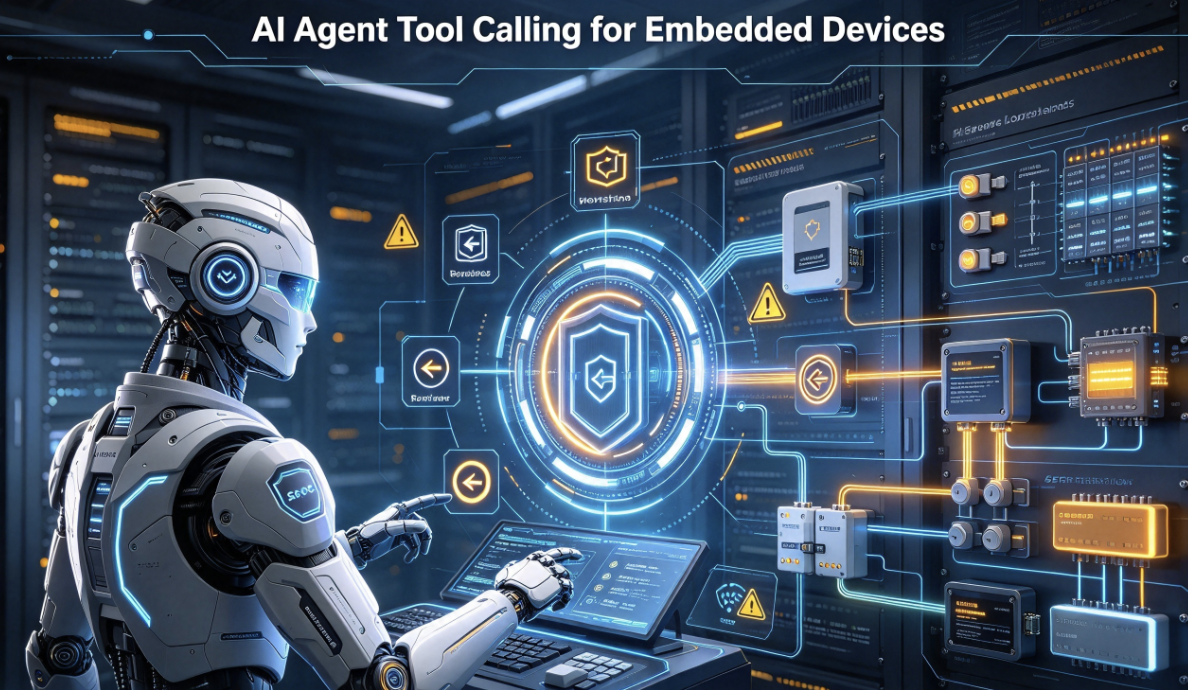
AI Agent Smart Terminal Architecture
Agent orchestration, permissions, tool calling, multimodal context and edge/cloud execution.
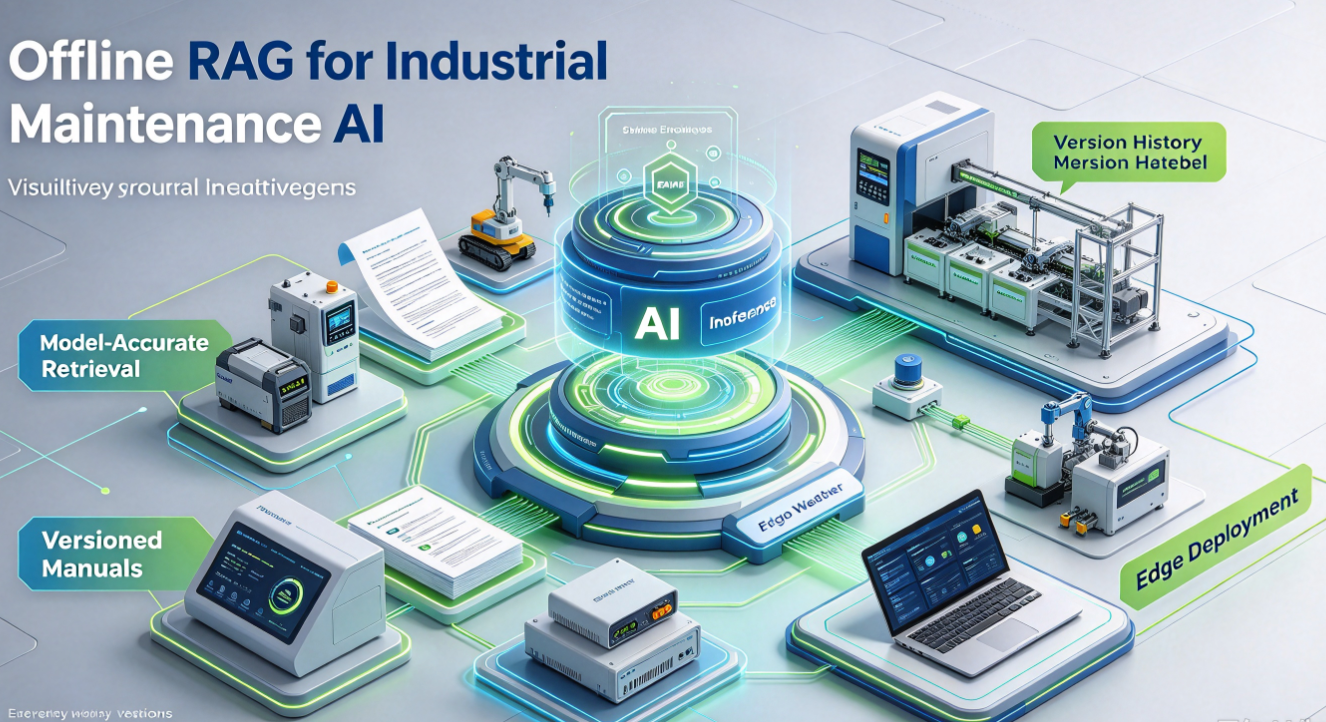
Offline RAG for Industrial Maintenance AI
Local knowledge systems, versioned documentation, trusted retrieval and offline edge deployment.
Cloud vs On-Device Voice AI Architecture
Privacy boundaries, hybrid inference and offline fallback.
RK3576 AI Terminal Board Design Review Checklist
Display, AI, Ethernet, I/O, power, thermal and production-readiness review.
22. Engineering References
The security architecture discussed in this guide is aligned with engineering concepts documented in:
- Android Open Source Project - Verified Boot and Android Verified Boot
- Android Open Source Project - Virtual A/B and OTA Updates
- Das U-Boot - FIT Signature Verification
- NIST IR 8259 Rev. 1 - Foundational Cybersecurity Activities for IoT Product Manufacturers
- NIST IR 8259A - IoT Device Cybersecurity Capability Core Baseline
- NIST SP 800-218 - Secure Software Development Framework
- NTIA / CISA - Software Bill of Materials guidance
- European Commission - Cyber Resilience Act guidance
Engineering Conclusion
A trustworthy edge AI terminal is not created by adding one security chip, one signed image or one OTA function.
Trust is created through a connected architecture: verified boot, rollback protection, unique device identity, protected keys, signed updates, recoverable deployment, controlled debug access, software transparency, vulnerability response and measurable production validation.
For engineering teams, this changes the product-selection question from: "Does the board support secure boot?" to: "Can the entire product lifecycle maintain an auditable chain of trust from manufacturing to field recovery?"
Technical engineering article by LcdChip - Edge AI Terminal Hardware, Embedded Systems and Production Engineering.
Related information