Hello! now
 tms@lcdchip.com



Why Commercial LCDs Die in the Field: A Guide to True Industrial Displays
The 6-Month Field Recall Disaster
Let's talk about what actually happens when you bolt a standard commercial LCD panel into a piece of heavy machinery. It looks flawless on the lab bench. The procurement team is happy because they saved $30 per unit. But six months later, the units deployed on a drilling rig in North Dakota are freezing up, and the ones on a factory floor in Texas have shattered from continuous engine resonance.
You are now facing a massive field recall that wipes out all the cost savings and ruins your engineering reputation.
Building an industrial Human-Machine Interface (HMI) is not about slapping a thick piece of Gorilla Glass over a cheap tablet display. It requires a fundamental shift in how you evaluate the physics of the display module. This is why veteran hardware engineers refuse to design-in anything other than heritage industrial lines like Sharp and Mitsubishi. Here is the unvarnished engineering reality of what kills displays in the field.
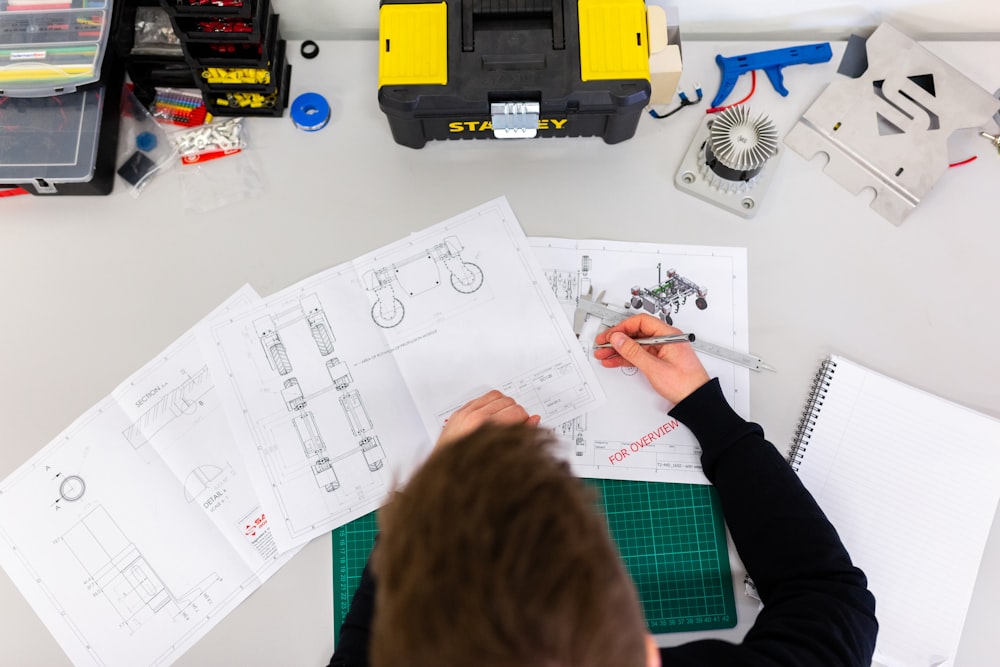
Field deployments are unforgiving. Standard commercial glass lacks the structural rigidity and thermal envelope to survive constant mechanical stress on the factory floor.
1. The Chemistry of Heat: Isotropic Failure and Sealant Degradation
Everyone looks at the max operating temperature on a datasheet, but very few engineers understand why a screen fails at 70°C. It is rarely the silicon driver IC that dies first; it is the liquid crystal fluid and the mechanical seal.
- The Isotropic Clearing Point (Tni): When a standard panel hits its thermal limit (often around 60°C to 70°C due to ambient heat plus internal backlight thermal load), the nematic liquid crystals lose their directional order. They transition into an isotropic liquid. The screen loses its birefringence and turns into a giant black rectangle. Industrial panels from Mitsubishi use a highly specialized, chemically altered high-Tni fluid that maintains its crystalline structure up to 85°C or even 95°C.
- UV and Sealant Bleed: If your HMI is outdoors, UV radiation will attack the epoxy edge sealant holding the two layers of TFT glass together. Once the sealant micro-cracks, humidity enters, and the liquid crystal fluid leaks out, creating permanent brown "bruises" spreading from the corners of the screen. True industrial displays use UV-resistant, thermally cured automotive-grade sealants.

Extreme ambient heat combined with internal backlight thermals easily pushes standard LCDs past their isotropic clearing point (Tni), rendering the screen entirely black.
2. Vibration: The Silent Killer of FPCs
If you are designing an interface for a CNC machine, a tractor, or railway equipment, constant Z-axis vibration is your primary enemy.
Commercial displays rely on standard ZIF (Zero Insertion Force) connectors and thin FPCs (Flexible Printed Circuits). Under continuous 5G to 10G mechanical resonance, two things happen: first, the gold contacts on the FPC undergo "fretting corrosion"-microscopic rubbing that oxidizes the pads and causes intermittent flickering. Second, the FPC can physically back out of the ZIF latch.
The Industrial Fix: Look at the back of a Sharp industrial panel. You won't see a flimsy ZIF socket. You will find ruggedized, locking Hirose or JAE connectors with mechanical retention clips. Furthermore, the PCB components on the back of an industrial panel are often underfilled or conformally coated to prevent SMD capacitors from vibrating off the board.

Unlike consumer tablets, true industrial displays utilize mechanically locking LVDS connectors and conformally coated PCBs to prevent disconnection under heavy vibration.
3. Supply Chain EOL: The Hidden Cost
This is the trap that destroys project budgets. Consumer display production lines are retooled every 12 to 18 months to chase higher resolutions and thinner bezels. If you design a custom cast-aluminum bezel and route a specific 40-pin LVDS harness for a consumer screen, getting an End-of-Life (EOL) notice a year later is devastating. You have to redesign your mechanics, rewrite your initialization firmware, and potentially repeat your EMC certifications.
Industrial lines from Sharp and Mitsubishi offer form-fit-function compatibility and guaranteed production longevities spanning 5 to 10 years. The tooling holes don't move. The connector stays in the exact same spot. Your engineering investment is protected for the entire lifecycle of your industrial product.
Stop Gambling with Your HMI Hardware
Specifying a display for a harsh environment is an exercise in risk mitigation. You can either pay slightly more upfront for a panel engineered for abuse, or you can pay exponentially more later in warranty claims, field technician travel time, and damaged brand reputation.
We do not deal in consumer-grade glass for industrial applications. Our inventory focuses strictly on mission-critical hardware. We maintain deep stock of the most sought-after wide-temperature, high-vibration LCD modules from Sharp and Mitsubishi.
Are you facing an EOL crisis or struggling with field failures? Contact our sourcing team today. We can cross-reference your failing commercial screen and provide a form-fit-function industrial replacement that will actually survive the factory floor.
Related information